
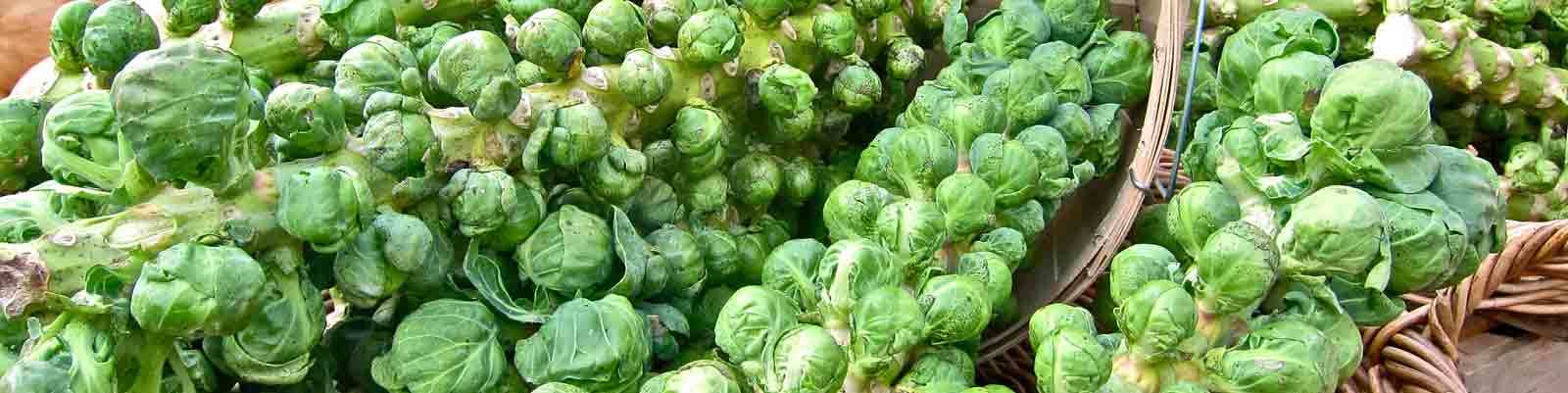
Brussels Sprout
Brussels Sprouts, as we know them, were grown possibly as early as the 1200s in what is now Belgium, although they were likely cultivated in ancient Rome, possibly having been developed from a wild cabbage or kale. Brussels Sprouts are part of the Brassica family, the largest of the vegetable families.
The first written reference dates to 1587, where they were grown near Brussels, Belgium. During the 16th century, Brussels Sprouts enjoyed a popularity in the southern Netherlands that eventually spread throughout the cooler parts of Northern Europe. Used as fall and winter greens in Europe, they were introduced to America in the 1850s.
-
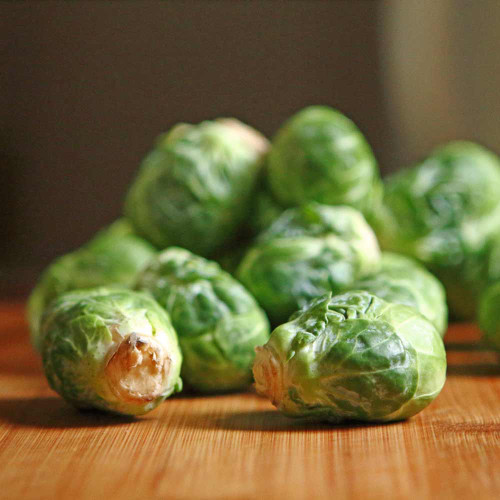
Catskill Brussels Sprout Seeds - (Brassica oleracea)
$3.60Catskill Brussels Sprout A dwarf or semi-dwarf variety with heavy yields, large firm dark green early 1 1/4 - 1 3/4" sprouts on 20-24" plants with medium green leaves. A heavy producer, it is used...$3.60
