
Mexican Sunflower Seeds - (Tithonia rotundifolia 'Torch')

- SKU:
- F1095
- Seed Count:
- Approx 50 seeds per pack
- Type:
- Annual
- Status:
- Heirloom, Non-Hybrid, Non-GMO seeds



Description
Mexican Sunflower - The Vermilion-Orange Pollinator Fueling Station
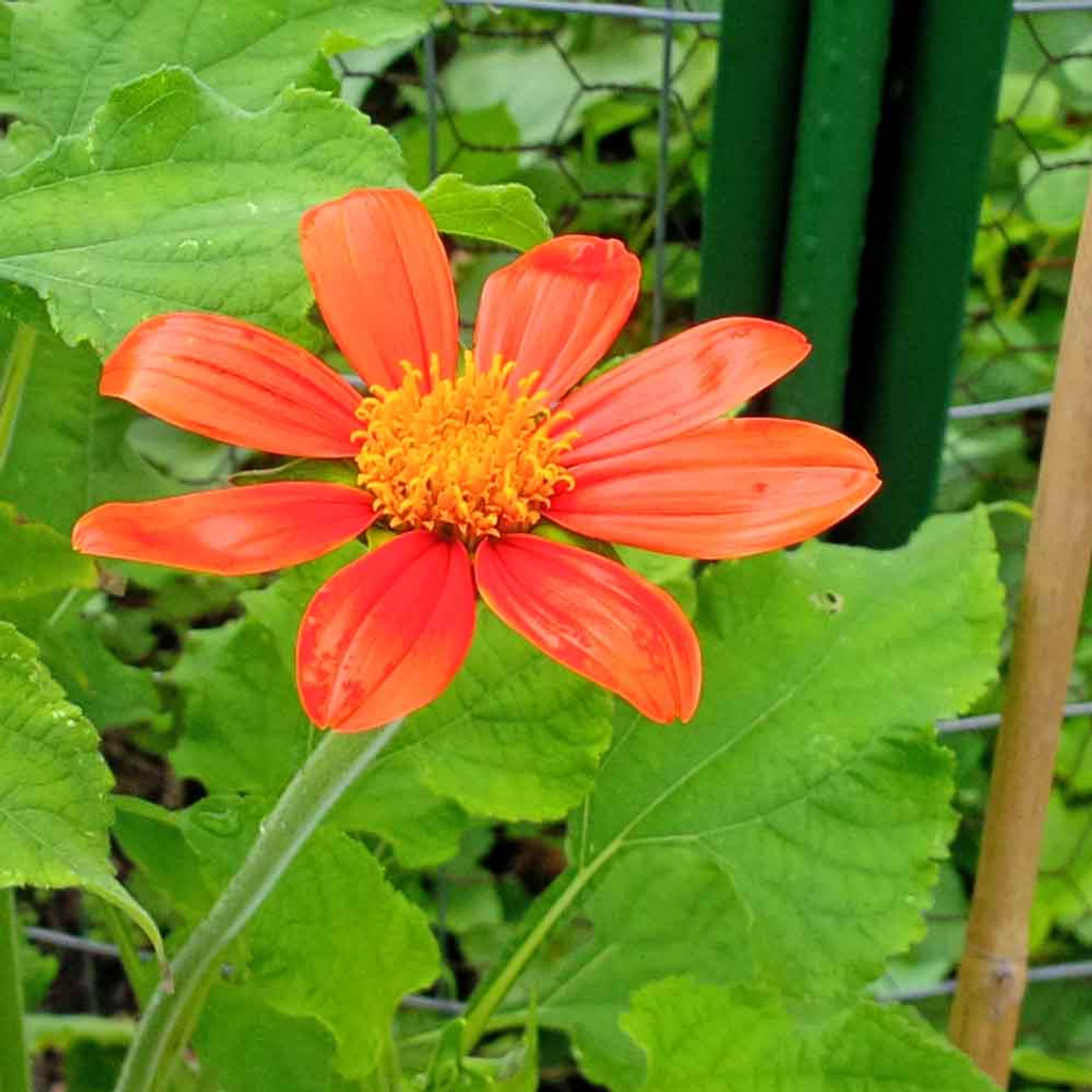
A saturated vermilion-orange erupts from the edge of your garden, vibrating with an intensity that yellow sunflowers cannot match. Looking across your garden at midday, you see the plant pulsing with movement; butterflies and bees literally mob these golden-centered blooms. It will be hard to find a single flower without a pollinator on it. The Mexican Sunflower serves as a vital fueling station, overflowing with the rich nectar Monarch butterflies need for their thousand-mile migration. Even though it's called a sunflower, this upright, multi-branching beacon stays productive even in the early afternoon heat of high summer.
Details
The Mexican Sunflower thrives when the summer sun reaches its peak. It focuses the sun's power into rapid growth while other flowers stall. It is a massive, commanding annual that needs its own space, soaring to six feet tall and three feet wide in a single summer. Resilience defines its signature leaves —broad, dark-green triangles that feel like heavy velvet. A dense, microscopic fuzz covers the surface, serving as a physical heat shield and reflecting harsh ultraviolet light. By trapping a thin layer of humid air against the leaf, this fuzz allows the plant to keep breathing and redirect energy into its roots while other flowers are wilting under the heat load.
Thick, three-inch heads of intense vermilion-orange with a dense, golden-yellow center emerge from the stalks. These blooms provide a critical stopover for the Monarch butterfly’s thousand-mile autumn journey, offering the high-energy nectar they need to survive the trip south. Predatory syrphid flies often patrol the petals, keeping other garden pests away. Once the orange ribbons of the petals fade and fall, goldfinches perch on the heavy, spent flower heads to pluck the seeds.
The plant shatters hard, compacted clay by driving a single, powerful taproot deep into the ground. This deep mining pulls up hidden caches of phosphorus and potassium from far underground and locks them into its massive leaves and stems. Chop and drop the stalks at the end of the season to return those deep-earth minerals to your topsoil as high-quality natural fertilizer.
Because this deep taproot serves as the plant's anchor and lifeblood, it does not grow well in standard containers with bottoms; it requires open ground or very large, bottomless raised beds to thrive. While it thrives as a summer annual in USDA Zones 3–11, it can behave as a semi-woody shrub in the frost-free climates of Zones 10 and 11.
History
The story of the Mexican Sunflower began in the seasonally dry tropical regions of Mexico and Central America. Spanish explorers first brought the seeds to Europe in the 1500s, and by the 1700s, Thomas Jefferson grew them in the historic gardens at Monticello. In its native landscape defined by intense afternoon sun and sudden monsoonal showers, Aztec and Nahua civilizations first domesticated the plant. They called it chimalxochitl, or "Shield-Flower".
For the Aztec nobility, this plant was far more than a garden ornament; it was a biological symbol of solar power and divine protection. They utilized it in ritual ceremonies and as divine offerings. The name was literal; the plant acted as a resilient, orange-clad guardian that stood unyielding against the same scorching summer sun that the culture celebrated.
Generations of early gardeners saved seeds only from the strongest survivors that flourished in the heat and found their own moisture in the deep soil. This centuries-long selection process created resilience inside every seed you plant today. The plant finally exploded in popularity across the North during the 1940s, when breeders selected earlier-blooming strains that could flower before the first autumn frost. During this era, seed catalogs like Dreer's began calling it the "Golden Flower of the Incas" to give it exotic appeal, though the name misplaced the plant's history—the plant's true home is thousands of miles north of the Inca Empire. The ‘Torch’ cultivar arrived in 1951, winning the All-America Selection award by perfecting this earlier bloom and a more manageable, sturdier height for the home garden.
Uses
This flower acts as a living boundary and a high-visibility waypoint for the Monarch migration. In the kitchen, it serves as a distinct cut flower; the long stems support single blooms that hold their shape well in arrangements. Planting Mexican Sunflowers near your vegetable beds protects your tomatoes and peppers from aphids without the need for sprays by inviting a natural security force of beneficial flies to the area.
Companion Planting
Mexican Sunflowers thrive alongside summer squash, peppers, and tomatoes. Because this plant flowers early and often, it fills your garden with active pollinators just as your heavy-fruiting crops hit their stride. Predatory syrphid flies add an extra layer of defense; their larvae hunt the pests that typically target these vegetables.
Give Mexican Sunflowers at least two feet of breathing room from smaller neighbors. The plant produces a natural weed-suppressant—a process called allelopathy—which can accidentally stunt the growth of less aggressive seedlings if they are planted too close to its base.
Avoid planting near Alliums, such as onions and garlic, as these can interfere with the beneficial soil microbes the sunflower relies on to mine minerals.
Planting and Growing Tips
This is a high-heat plant that requires full sun and plenty of room for roots to grow well. Cool-winter gardeners should start seeds indoors on heat mats 6 to 8 weeks before the last frost. Seedlings struggle if exposed to cold soil or nights below 60°F, so do not rush them into the ground. Warm-winter and arid climate gardeners can direct-sow once the soil temperature is reliably above 70°F. Because the seeds need light to sprout, surface-sow them and press firmly into the soil without burying them.
If you plant them in overly rich or heavily fertilized soil, the plants grow too fast and prioritize lush foliage over strong flowers. This creates lazy, weak cells in their stout but hollow stems, leading to lodging—where the plant snaps under its own weight during a summer storm. To build a sturdier, bushier frame, pinch the top of the plant when it reaches 12 inches tall. This disrupts internal signals that tell the plant to grow straight up, forcing it to branch out and become more resilient to wind.
Harvest Tips
To enjoy them as cut flowers, morning harvests catch the plant when its stems are fully hydrated and plump, which prevents them from drooping in the vase. Regularly removing spent flower heads, or deadheading, tricks the plant into producing more blooms. If you wish to support the local bird population, leave the final flower heads of the season to dry on the stalk; they will provide goldfinches with a sturdy, high-energy feeding platform well into the autumn.
Learn More
- The Sunflowers - A poem by Mary Oliver
- Trap Crops - Organic Pest Management
- Planting a Pollinator Feast
From the soil to the seed to the food you eat - we'll help you grow your best garden!
3 Reviews
-
Monarchs 1st time!
We had monarchs in our yard for the first time! Also had swallowtails and the biggest fuzzy bees we’ve ever seen. All loved these beautiful flowers. Will plant them every year!
-
Grew well in clay soil
This grew well in my SE PA clay soil, topping out at about 5 feet. Unfortunately, the branches were brittle and broke under their own weight (but they kept blooming!)
-
Beautiful
It is beautiful plant! Flowers are bright orange with height of 5. About 3 across flower size. Hope to have in my bed every year.
Related Products
Related Products

Mexican Marigold/Mexican Tarragon Seeds - (Tagetes lucida)
Maximilian's Sunflower Seeds - (Helianthus maximiliani)

Skyscraper Sunflower Seeds - (Helianthus annuus)
Mexican Zinnia 'Persian Carpet' Seeds - (Zinnia haageana)

