English Thyme Seeds - (Thymus vulgaris)

- SKU:
- H1094
- Seed Count:
- Approx 100 seeds per pack
- Type:
- Annual
- Days to Germination:
- 15-30 days at 55-65F
- Soil Requirements:
- Well-drained soil
- Light Preference:
- Sun or partial shade
- Plant Spacing:
- 8-12"
- Status:
- Heirloom, Non-Hybrid, Non-GMO seeds




Description
English Thyme - A Classic Kitchen Herb
English Thyme is rightfully celebrated as a kitchen staple—the savory foundation of a perfect sauce or roast. Yet, its long culinary use hides its rugged biological truth. This is a survivor, evolved in the limestone crags of the Mediterranean. Its name derives from the Greek thumos, meaning "smoke" or "courage". Ancient brewers harnessed this resilience to preserve Gruit ales, and soldiers used it to steel their nerves. Plant this seed and you do not just grow a spice; you install a woody, perennial anchor that protects your garden's health, confuses pests, and provides a culinary backbone.
Details
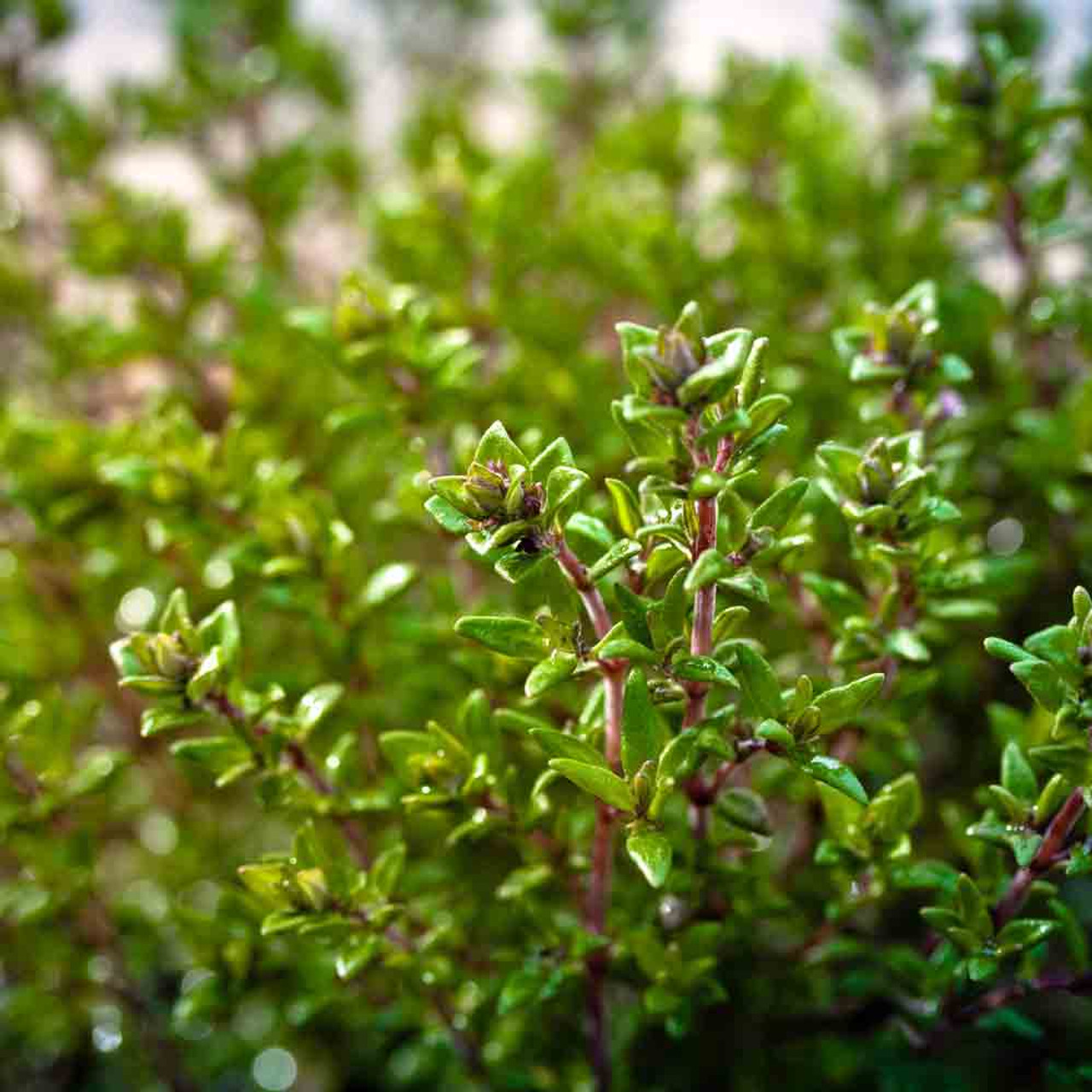
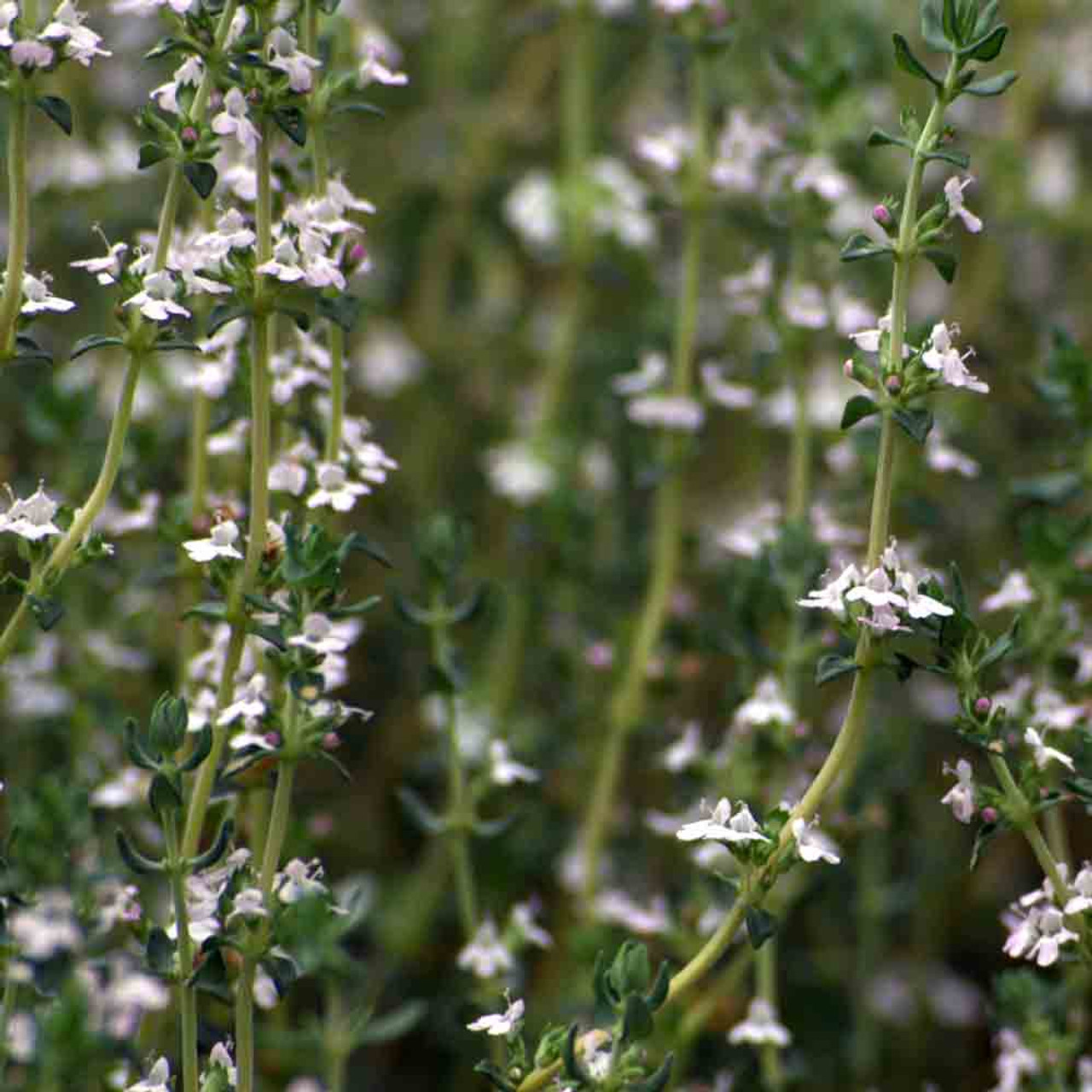
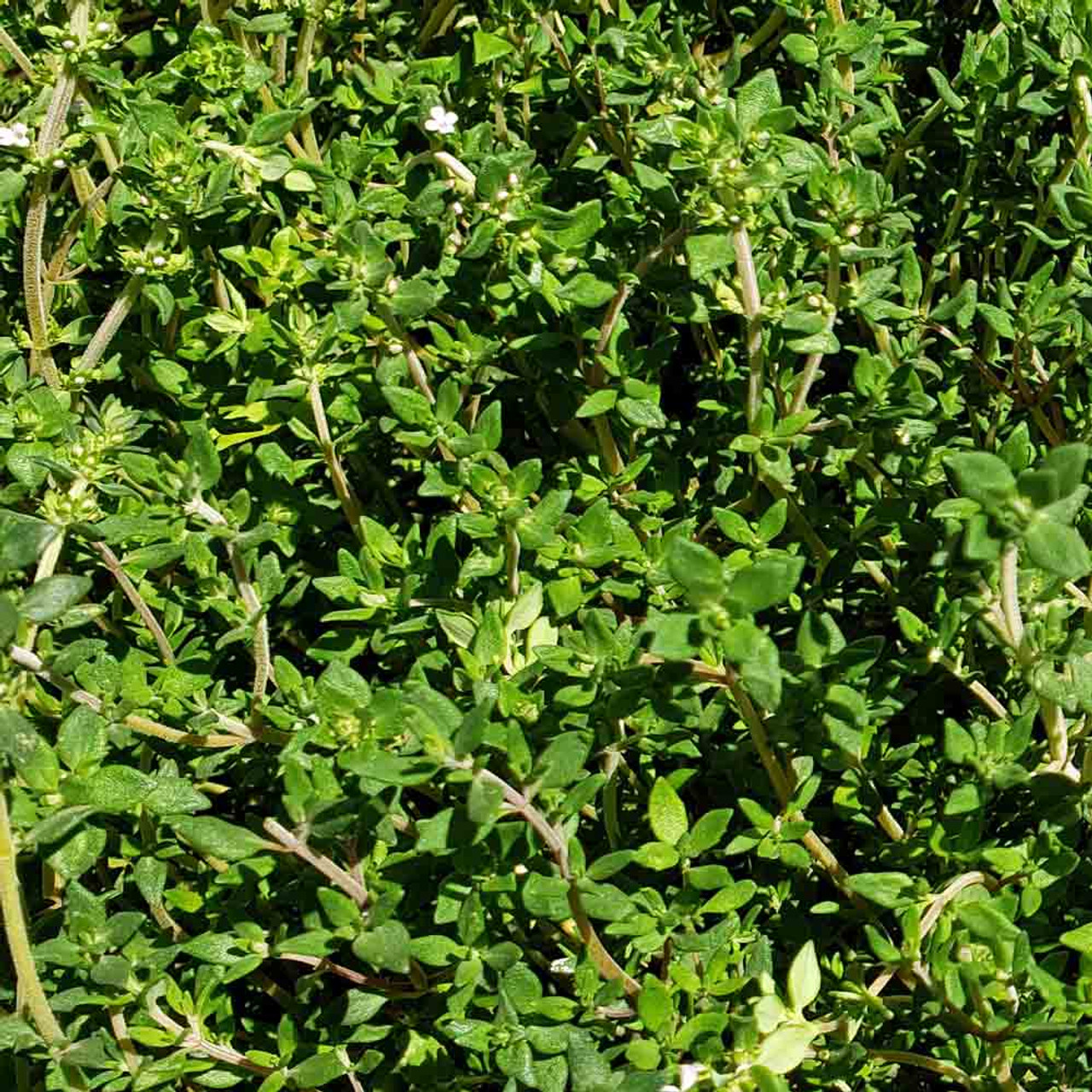
English Thyme stands as a low-growing woody perennial, distinct from its mat-forming cousin, Creeping Thyme. English Thyme grows upright on stiff stems, typically reaching 6–12 inches in height. Botanists define it by its "zygomorphic" flowers—meaning they have bilateral symmetry - like a human face - rather than the radial symmetry of a daisy. This trait, along with its square stems and opposite leaves, marks it as a true member of the Mint family.
This plant masters drought tolerance. Its tiny, grey-green leaves minimize transpiration - the release of water vapor - while the greyish tint reflects intense sunlight. Magnification reveals the source of its scent: distinct, translucent oil glands that act as reservoirs. Hardy from Zones 5–9, it can handle the cold, but it dislikes "wet feet" (winter soil saturation).
History
Consider this plant a genetic archive of the Old World. Its name roots in the Greek thumos, meaning "smoke" or "courage". Sumerians used it as an antiseptic in 3000 BCE; in Rome, soldiers bathed in thyme-infused water to steel themselves for battle ("to smell of Thyme" was to smell of martial vigor). Before hops dominated brewing, Thyme served as a cornerstone of "Gruit"—the herbal mixture used to flavor and preserve medieval ales against spoilage.
The variety we call "English Thyme" originated in the Western Mediterranean; the Romans likely introduced it to the British Isles. Over centuries, the broad-leaved form that survived the damp, cool British climate diverged from the narrower-leaved French varieties. Monastic apothecary gardens preserved it through the Dark Ages, not just as a flavor, but as a biological shield—most famously in the "Four Thieves" vinegar, used to repel pestilence during the Black Death.
Uses
Essential oils drive its kitchen uses. Unlike soft herbs like basil and cilantro, which lose their volatile aromas when heated, Thyme’s oils withstand long, slow cooking methods like braising and stock-making without dissipating. It serves as the earthy backbone of the bouquet garni. Surprisingly, these herbal notes also cut through richness in desserts—try infusing it into dark chocolate truffles or lemon sorbet for a sophisticated, cooling finish. Beyond the kitchen, it remains a potent antiseptic; a tea of the leaves serves as a traditional remedy for respiratory congestion.
Companion Planting
Thyme anchors the garden ecosystem. Below ground, Thyme recruits specific mycorrhizal fungi, shifting soil biology toward the fungal dominance preferred by perennials.
Above ground, its volatile oils effectively jam the radar of pests. When planted near Brassicas like kale and cabbage, it masks the chemical signals that attract Cabbage White Moths. It also functions as a critical insectary plant. Its shallow flowers perfectly fit the short mouthparts of parasitic wasps and hoverflies, which hunt aphids. It also provides early-season nectar for solitary bees and butterflies.
Planting and Growing Tips
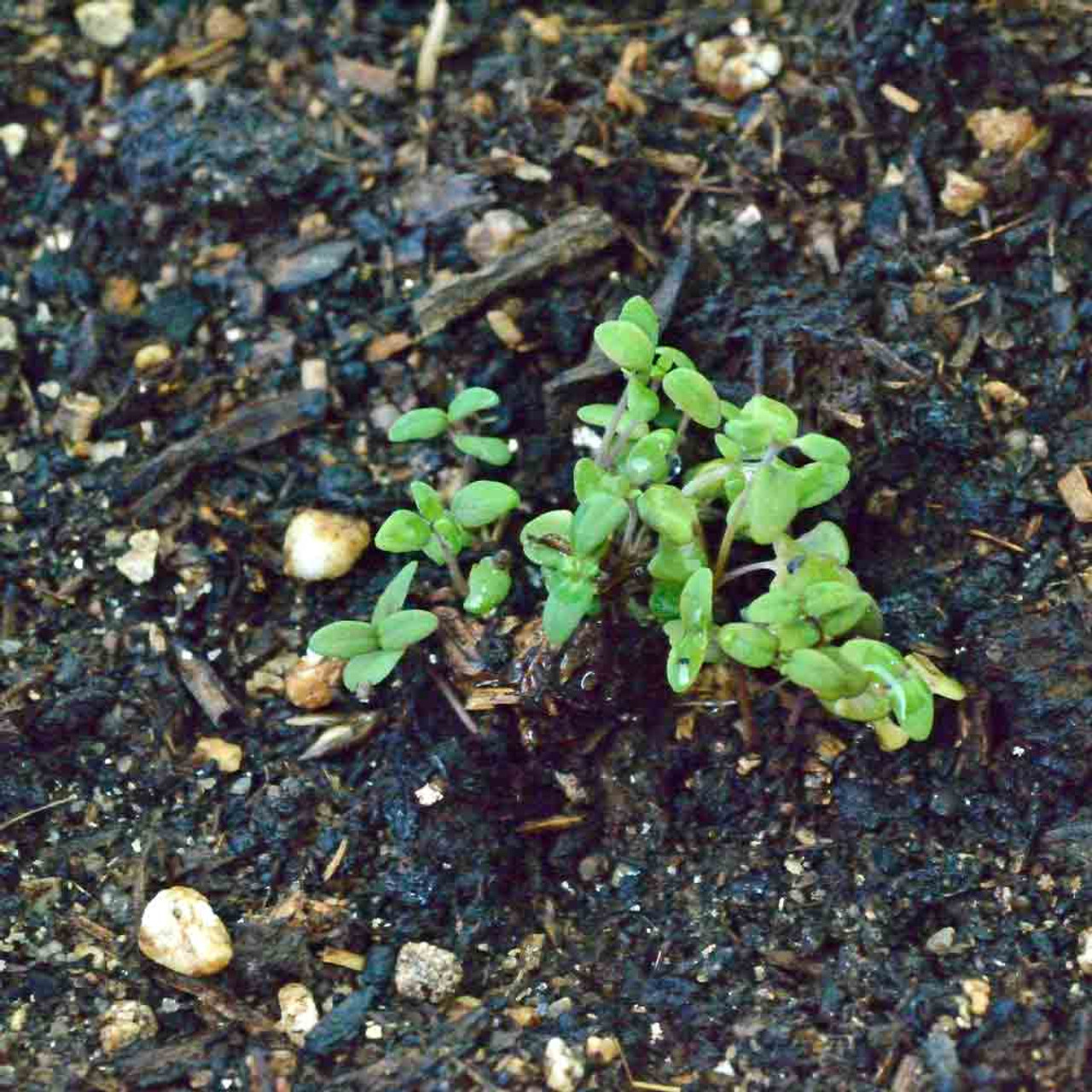
Light-dependency defines the seed sowing strategy. Do not bury these seeds. Sow them on the surface of pre-moistened soil and press them firmly into contact. They require light to trigger the germination enzyme. Keep the soil damp (not sodden) until the tiny seedlings emerge in around 14–21 days.
Once established, avoid heavy tillage, as it destroys the fungal networks in the soil that Thyme relies on. Instead, mulch with wood chips to feed the white fungi that release nutrients the plant needs. Thyme produces higher oil concentrations in lean, well-drained soil. Over-watering or over-feeding creates lush foliage that lacks flavor or scent.
Harvest Tips
Harvest by the clock to capture peak potency. The essential oils reach maximum volatility between 6:00 AM and 11:00 AM, after the dew has dried but before the sun is at its height. Afternoon heat steals flavor as the oils vaporize. For culinary use, harvest stems just before the flowers open; once blooming starts, the leaf chemistry shifts, and the flavor profile changes. For drying, hang bunches in a warm, dark place until crisp and crumbly.
Learn More
From the soil to the seed to the food you eat - we'll help you grow your best garden!
Related Products
Related Products

Creeping Thyme Seeds - (Thymus serpyllum)

Chioggia/Candystripe Beet Seeds - (Beta vulgaris)

Rainbow Beet Mix Seeds - (Beta vulgaris)

Anasazi Bush Bean Seeds - (Phaseolus vulgaris)