
Honkin' Big Black Cherry Tomato Seeds - (Lycopersicon lycopersicum)

- SKU:
- V1159
- Seed Count:
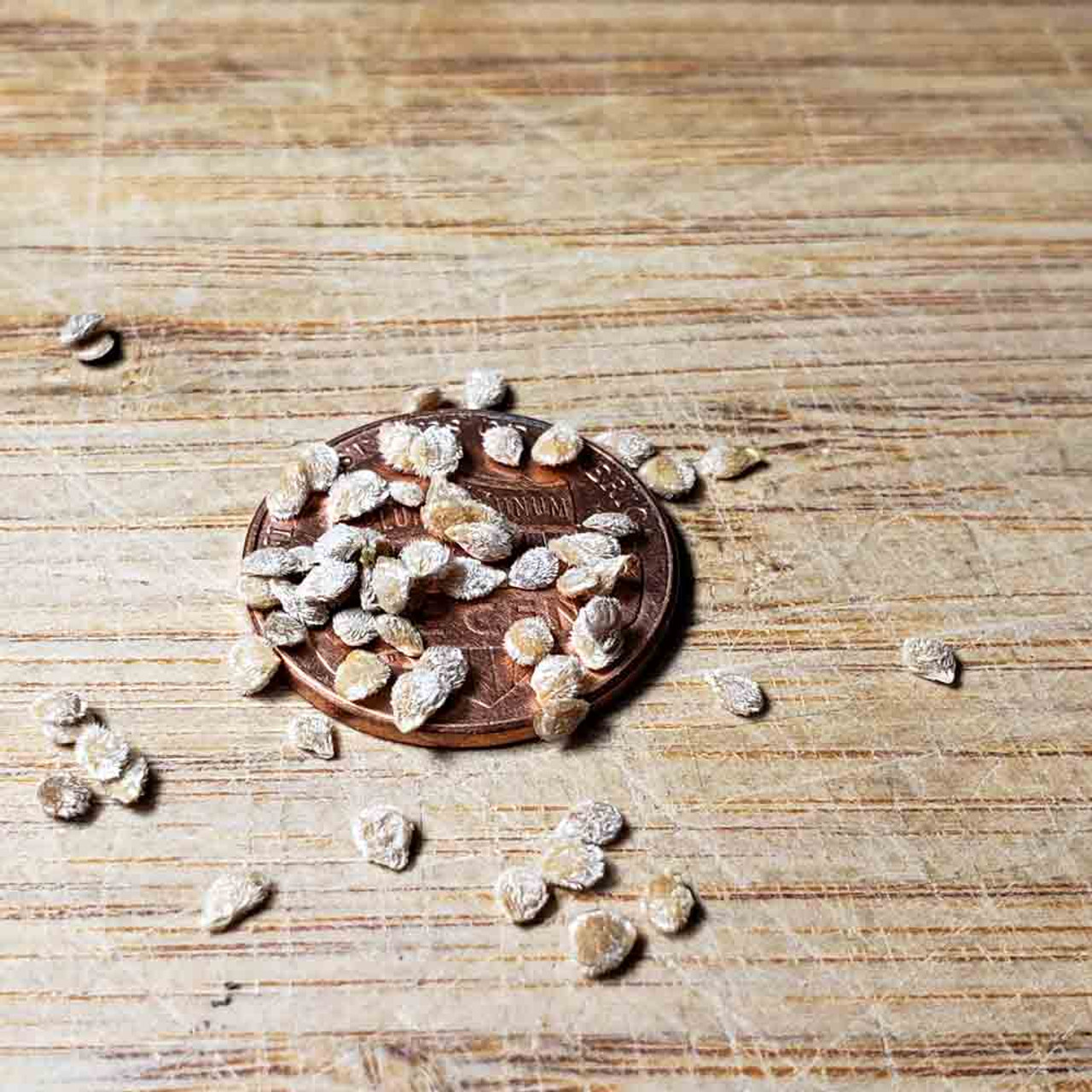
- Approx 25 seeds per pack
- Days to Maturity:
- 65-70 days
- Type:
- Indeterminate
- Size:
- Cherry
- Color:
- Black
- Days to Germination:
- 5-7 days @ 75-95F
- Light Preference:
- Full sun
- Plant Spacing:
- 12"
- Status:
- Non-Hybrid, Non-GMO seeds







Description
Honkin' Big Black Cherry Tomato - The Half-Dollar Fruit With Beefsteak Depth
Sometimes the most exceptional varieties are not the product of a formal breeding program, but simply appear as a gift from the garden itself. This tomato began as a vigorous, mysterious volunteer that outperformed every other plant in the garden. It produced "honkin' big" fruits—half-dollar-sized tomatoes with a complex, smoky sweetness that rivaled the finest beefsteaks. It is an invitation to grow a living mystery—a massive, productive vine that proves nature is still the ultimate plant breeder.
Details
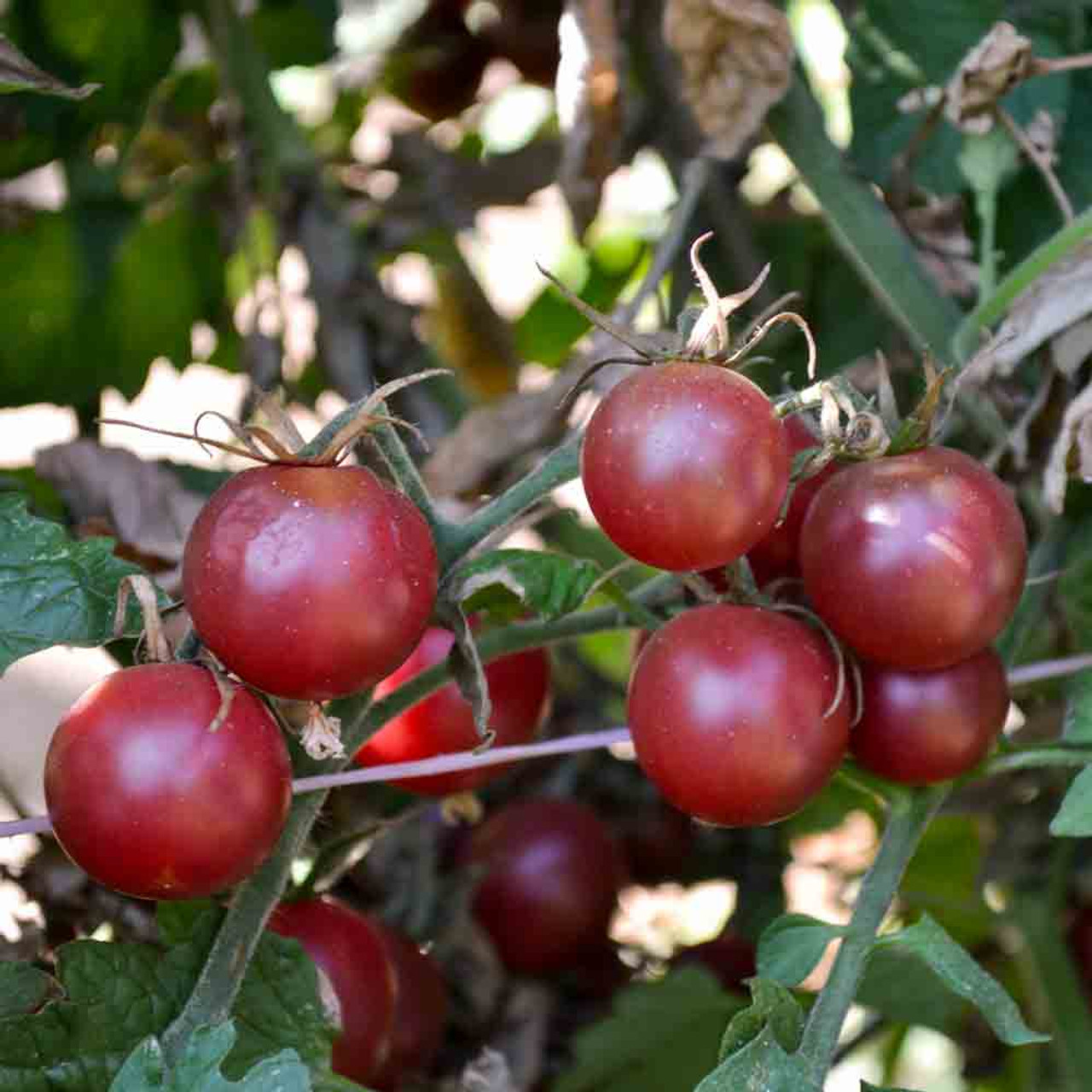
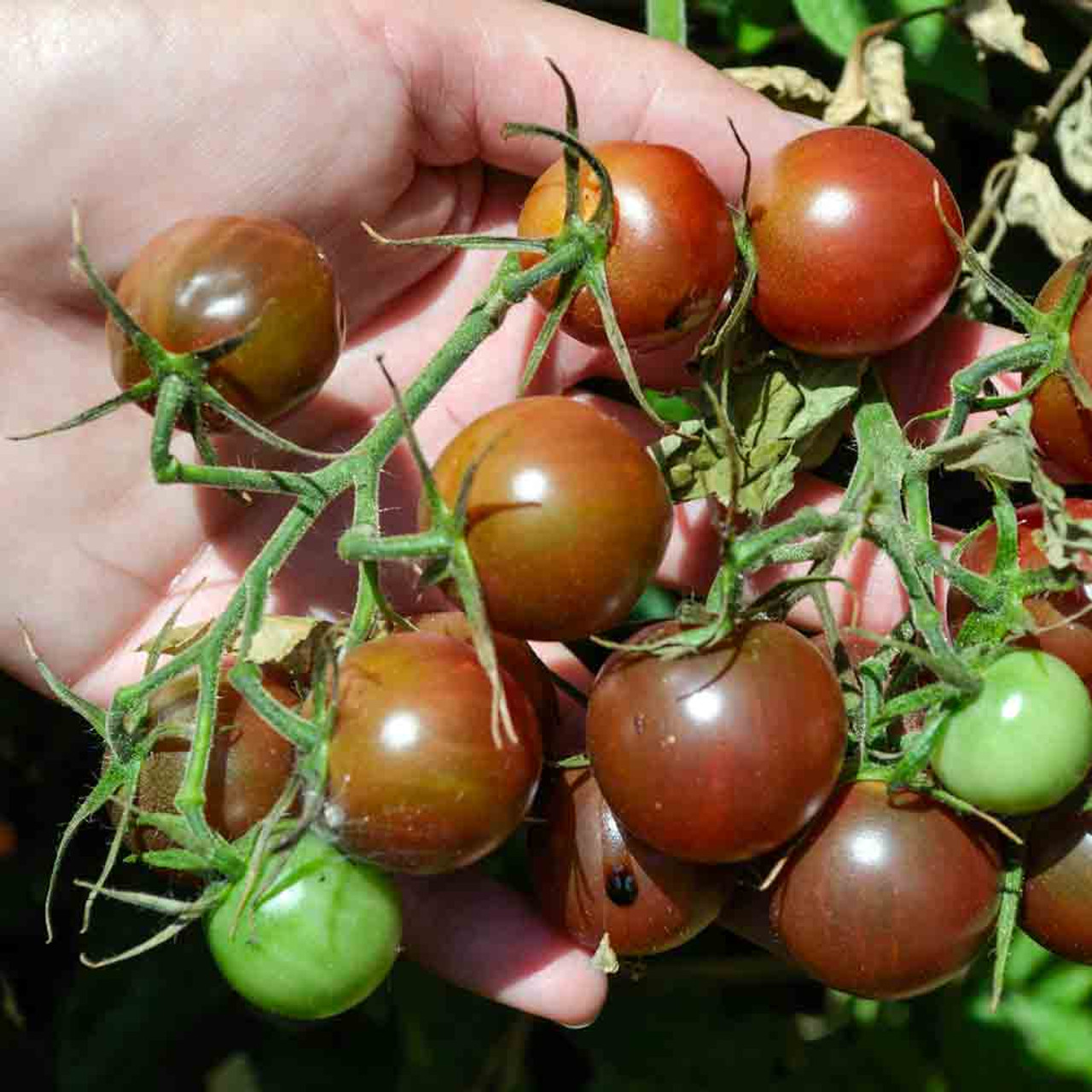
The Honkin' Big Black Cherry distinguishes itself from standard cherry varieties through the sheer size of its fruit. While most cherries range from dime to nickel size, this selection consistently produces fruits the size of a half-dollar. The skin ripens to a deep, dusty mahogany-purple, a color created as chlorophyll retention blends with red lycopene in the flesh. The plants typically display a regular-leaf habit and grow with exceptional vigor, setting heavy trusses of fruit well into the cool weather of autumn until a hard frost kills the vines. Note that this variety is a "sport" of unknown provenance rather than a commercially stabilized cultivar. It breeds true for the vast majority of gardeners, though an observant grower may occasionally notice slight variations, which serves as a reminder that this is a living, evolving lineage drawn directly from nature.
History
In 1995, nearly a decade before the commercial seed trade introduced the standard 'Black Cherry,' Mayo Underwood discovered a rogue volunteer growing just outside her Woodstock, Illinois garden. This plant grew vigorously and bore fruit significantly larger than any other cherry tomato in her plot. Mayo tasted it, loved it, saved the seed, and it became a perennial favorite due to its exceptional production and flavor. Years later, seed historian and our mentor Suzanne Ashworth grew out Mayo’s discovery and noted its striking resemblance to the 'Black Aztec' (or Negro Azteca), a rare, ancient landrace. While its arrival in an Illinois garden remains a mystery, the Honkin' Big Black Cherry stands as a distinct discovery, offering the robust size and complex flavor profile often lost in modern commercial introductions.
Uses
Enjoy this tomato primarily as a fresh snack, where its larger size bridges the gap between a cherry and a small salad tomato. The flavor profile balances sweet, acidic, and salty notes, creating a smoky complexity. This depth makes it a favorite for eating right off the vine. Beyond fresh eating, the high sugar content allows the halves to caramelize beautifully when roasted, creating a rich, rustic sauce. The fruits also possess enough structural integrity to pickle whole without collapsing.
Companion Planting
Pair these vigorous vines with functional companions to build a healthy garden ecosystem. Basil thrives in the same warm, solar-rich conditions and masks the tomato plants from thrips with its aromatic oils. Borage serves as a critical ally; its blue flowers attract bumblebees, which buzz pollinate the tomato flowers and significantly increase fruit set. French marigolds exude chemicals from their roots that suppress soil-borne nematodes, protecting the tomato's extensive root system.
Avoid planting fennel near the vines, as it releases allelopathic chemicals that inhibit tomato growth.
Planting and Growing Tips
Start seeds indoors 6 to 8 weeks before the last frost, using a heat mat to maintain soil temperatures between 70°F and 85°F. Cold soil delays or prevents germination. Because this indeterminate vine grows rapidly, use the "deep planting" method when transplanting: bury the seedling stem up to the top set of leaves. This encourages adventitious roots to grow from the buried stem, establishing the massive root system required to support a heavy crop. These plants feed heavily; amend the planting hole with bone meal to supply phosphorus and calcium for early root growth and to help prevent blossom end rot.
Harvest Tips
Harvest fruits once they deepen to a dark purple-brown and yield slightly to gentle pressure. "Black" tomatoes possess thinner skins that crack easily after heavy rains, so harvest at the "breaker" stage—when the fruit first shows a blush of color—if the forecast calls for a storm. These fruits finish ripening indoors without compromising flavor. Store all harvested tomatoes at room temperature, as refrigeration destroys the volatile compounds responsible for their complex, smoky flavor and degrades the texture.
Learn More
- Growing Tomatoes 101
- Determinate and Indeterminate Tomatoes - What's the Difference?
- Heirloom Tomato Growing Tips
- Heirloom Tomato Leaves - Potato Leaf vs Regular Leaf
- Blossom End Rot - What To Do
- Fermented Tomato Conserve
- Sicilian Eggplant and Tomato Sauce
From the soil to the seed to the food you eat - we'll help you grow your best garden!
2 Reviews
-
Funny Name Great Taste
When this variety was introduced I got such a kick out of what was written in the catalog about it I thought they deserved to sell some seed just for the sake of their sense of humor so I bought a packet. Then I gave a few plants to a friend to try. Not only did I decide I liked this one well enough to give it a permanent place in my garden, my friend told me she went out to her garden and turned around to catch her little dog carefully picking and eating only this variety. She said its her favorite also. Definitely a great find!
-
My Second Year Attempt
I may have mixed up my labeling last year but I was pleasantly surprised to grow out a beautiful plant that had half dollar size tomatoes that were the best tasting ever and yet did not appear black at all. I am wondering if the plant has not stabilized yet. This year I am starting new plants from the same seed package and also growing out six plants from seeds I saved from last years tomatoes. One of those six is potato leafed and the other five are regular. I will see what happens this year. I am very excited about this trial because these were really the best tasting tomatoes I have ever grown. I will make a follow up post at the end of the season and let you know what I learned.
Related Products
Related Products

Cherry Roma Tomato Seeds - (Lycopersicon lycopersicum)

Black Krim Tomato Seeds - (Lycopersicon lycopersicum)

Stupice Tomato Seeds - (Lycopersicon lycopersicum)

Jubilee Tomato Seeds - (Lycopersicon lycopersicum)

