
Table King Acorn Bush Winter Squash Seeds - (Curcurbita pepo)
- SKU:
- V1588
- Seed Count:
- Approx 25 seeds per pack
- Days to Maturity:
- 80-85 days
- Type:
- Winter
- Status:
- Heirloom, Non-Hybrid, Non-GMO seeds



Description
Table King Acorn Bush Winter Squash - Space-Efficient Roasting Squash
A hearty bowl of home-grown roasted winter squash soup on a cold evening is a distinct reward from the late-season garden. For many backyard growers, earning that deep, nutty flavor usually means dedicating space to vines that smother a raised bed. The Table King removes that compromise. Instead of sprawling outward, it compresses its growth into a tight, three-foot rosette. By keeping its above-ground footprint tidy, it pushes its energy downward into the root system and directly into the developing fruit. This delivers the dense, complex flavor of a traditional winter crop—allowing you to grow heavy, storable squash without surrendering your entire garden to get it.
Details
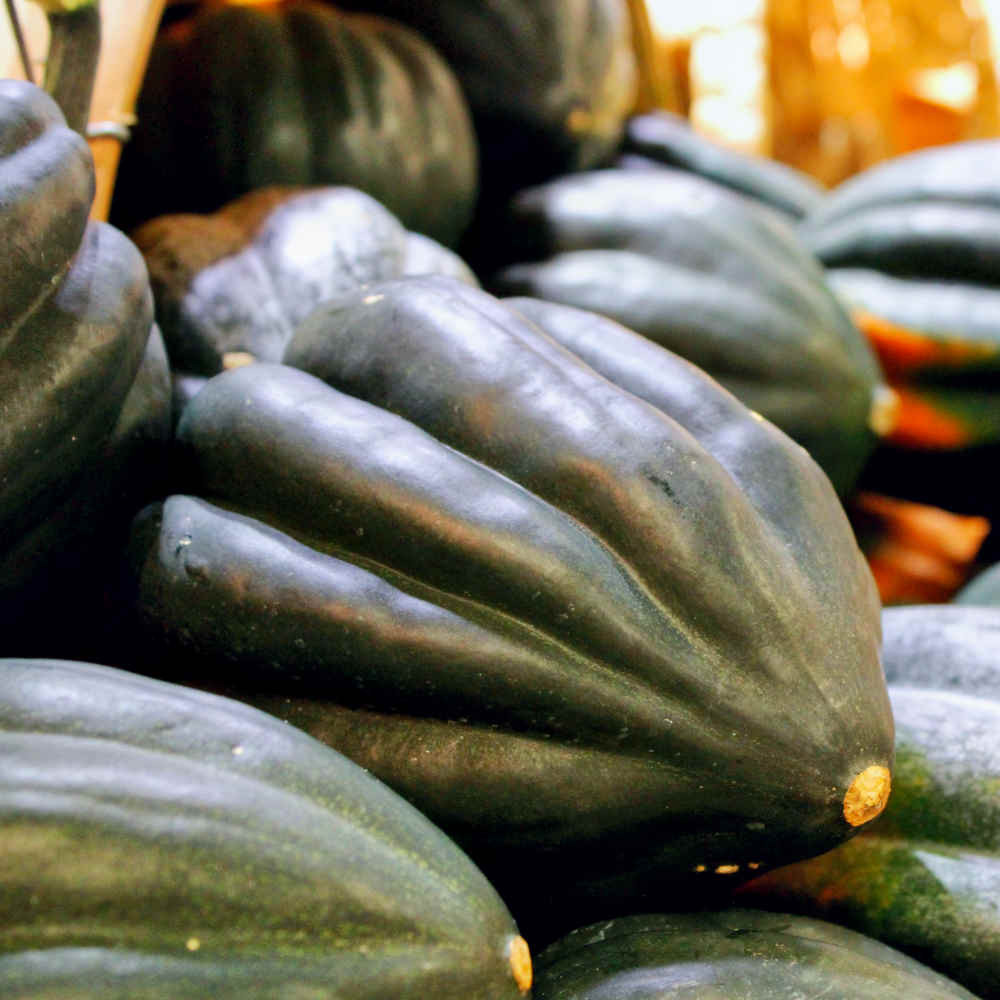
The Table King acorn squash is a compact, bush-habit plant that reaches a manageable 18 to 24 inches in height and spreads to a tidy three feet across. Beneath its deeply lobed, dark green leaves, the plant produces a heavy yield of heart-shaped, dark green fruit weighing right around two pounds. Because it focuses its energy into the fruit rather than vegetative spread, the flesh develops a dense, dry texture and a rich nutty flavor ideal for roasting. Early in the morning, the protective canopy opens to reveal large, bright yellow trumpet-shaped flowers—a timing mechanism perfectly synchronized with the daily foraging schedule of native squash bees.
Most winter squash will happily take over your entire garden, but this variety operates on its own set of rules. Thanks to a specific genetic trait known as the Bu gene, the plant compresses its growth into a dense rosette. This mutation forces the main stem to stay short and thick, stacking the leaves tightly together instead of sending out sprawling runners. To handle summer extremes, those leaves are armored with microscopic hairs and a waxy layer—a physical heat shield that reflects intense solar radiation. This prevents the foliage from overheating and shutting down, allowing the plant to continue photosynthesizing and building complex sugars even during the peak of a hot afternoon.
Below the soil, the fibrous root network searches for moisture and nutrients. If you are growing in containers, you must use a fifteen-gallon pot minimum. This volume of soil acts as a thermal battery, buffering the root zone against severe afternoon heat spikes while providing the necessary reservoir for consistent moisture.
History
We tend to think of bush-habit vegetables as modern novelties bred for patio containers, but the lineage of this acorn squash is much older. Like all Cucurbita pepo varieties, its deepest roots trace back to Mesoamerica, where ancient growers first began selecting wild, bitter gourds for edible flesh and seeds. Over thousands of years of careful observation and seed saving, these early farmers developed the distinct ribbed shape and dense nutrition we recognize today. As these seeds moved north along ancient trade routes, they adapted to new climates and shorter growing seasons.
The Table King traces directly back to the native stewardship of tribes like the Wampanoag along the Northeastern coast and the Miami Nation in the Great Lakes region. They were selecting these squashes for their concentrated nourishment and reliable winter storage. Because of their thick rinds and long shelf life, these early squashes were easily transported and served as a vital, nutrient-dense trade good across extensive regional networks long before the arrival of European agriculture.
In the early 1970s, Dr. Bernard Pollack at the University of Connecticut picked up this genetic thread. His goal wasn't to change the flavor or the resilience of the squash, but to stabilize the plant so that it would consistently stay compact, giving the home gardener a reliable winter storage crop in a standard backyard plot.
The result of his work was released as the Table King, and it immediately won the prestigious All-America Selections Gold Medal in 1974. It earned that rare distinction because it proved it could handle just about anything a home gardening climate threw at it, from short northern seasons to hot coastal summers. When you grow this squash, you are enjoying the immediate benefits of a resilient, space-saving crop thanks to thousands of years of careful, deliberate selection by the growers who came before you.
Uses
The Table King is naturally built to store less water and focus its energy on producing a rich, heavy flesh. The interior is remarkably dry and fine-grained. When roasted, it holds a firm, satisfying texture and develops a deeply nutty, buttery flavor with strong earthy undertones. Even the living plant itself gives off a distinctly fresh, slightly pine-like scent in the garden, a sign of the complex natural oils it produces.
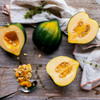
The dense flesh makes it quite versatile - you can halve it, bake it, and use the shell as a natural bowl to stuff with savory ingredients like sausage, mushrooms, pecans, and robust cheeses. It purées beautifully into thick winter soups with yellow onions and thyme, holds its shape in heavy winter stews and curries, or can even be baked into sweet breads and pies with a touch of cinnamon and ginger. Whether paired with bacon and balsamic vinegar or simply roasted with olive oil and sage, this squash carries its flavor in any dish.
Companion Planting
A squash plant this dense naturally attracts squash bugs, so it helps to confuse them before they find it. Interplant your squash with borage and dill. These companion herbs release strong scents that physically mask the smell of the Table King—hiding the plant from pests before they can land and lay eggs. This squash relies heavily on native bees for complete pollination. They nest directly in the topsoil right below the leaf canopy. If you till the soil around the base of the plant to manage weeds, you will destroy your own workforce. Keep the ground undisturbed and let the soil biology do its job.
Avoid planting near potatoes, as their aggressive root systems will compete heavily for the same nutrients and moisture in the topsoil. You should also keep it separated from other squash and pumpkin.
Planting and Growing Tips
You should direct sow the seeds straight into the garden rather than risking transplant shock from indoor starts. Wait until all danger of frost has passed and the soil is physically warm to the touch. Plant the seeds about an inch deep in rich, well-draining soil, spacing your mounds about three feet apart.
Do not rush the spring season. This squash handles heat exceptionally well and thrives during the hottest parts of the summer.
The same low, dense growth habit that makes this plant stable in high winds also creates a specific vulnerability. That tight leaf canopy traps humidity like a greenhouse. If you use overhead sprinklers, that trapped moisture provides the exact conditions for powdery mildew spores to take hold. You must water strictly at the soil level to keep the leaves dry. When planting, you must thin your mounds to a single, strongest plant to ensure maximum internal airflow.
Harvest Tips
While many winter squashes need to be cured to harden their rinds for storage, the Table King is different. When the rind is deep forest green and tough enough to resist a fingernail puncture, cut the stem cleanly with sharp shears to prevent vascular rot. Move the fruit directly into a cool, dark, and well-ventilated storage space to preserve its quality for the winter.
Learn More
From the soil to the seed to the food you eat - we'll help you grow your best garden!
Related Products
Related Products
Vegetable Spaghetti Winter Squash Seeds - (Cucurbita pepo)

Yellow Bush Scallop Summer Squash Seeds - (Cucurbita pepo)

Tatume Summer Squash Seeds - (Cucurbita pepo)
Early Summer Crookneck Squash Seeds - (Cucurbita pepo)

