
Tatume Summer Squash Seeds - (Cucurbita pepo)

- SKU:
- V1587
- Seed Count:
- Approx 25 seeds per pack
- Days to Maturity:
- 45-60 Days
- Type:
- Summer/Winter
- Status:
- Heirloom, Non-Hybrid, Non-GMO seeds








Description
Tatume Squash - Prolific, Heat Tolerant, Rich Flavor
If a summer heatwave has ever melted your zucchini, the Tatume squash is the rugged alternative your garden needs. It’s a biological multi-tool built to outsmart the worst problems of the modern summer. Instead of depending on a single stem, this sprawling vine drops secondary backup roots wherever it touches the soil, allowing it to easily bypass squash vine borer damage or squash bugs and keep growing. It bristles with stiff hairs to deter pests and reflects intense sunlight off its silver-mottled leaves to actively prevent overheating.
For thousands of years, indigenous people like the Tarahumara grew and selected this squash in the mountainous Sierra range of northern Mexico. They needed a dependable crop that could survive heavy monsoon downpours, severe dry spells, and rocky, marginal soil. By continually saving seed from the plants that endured those harsh extremes while still delivering exceptional flavor, they built a remarkably hardy plant. Growing this squash today means directly benefiting from that long history of adaptation; you get a plant that already knows exactly how to handle an unpredictable climate.
Because it is robust enough to shrug off the heat and actually stand up to pest pressures, it can focus its energy on producing dense, firm fruit. You get a reliable crop that has a genuine fighting chance in a harsh garden environment, delivering a rich, deep winter squash flavor in as little as forty-five days.
Details
This variety is a highly versatile producer, giving you two separate harvests from one planting: a tender summer squash and a thick-skinned winter keeper. It develops a deep, complex flavor profile that features a pronounced earthy aroma, a delicate sweetness, and a rich, roasted-nut undertone. The vines are vigorous, easily sprawling ten to twelve feet. While you can train them up a heavy-duty trellis or into a half-barrel to save space, letting them run across the dirt unlocks their greatest survival mechanism. As those leaf nodes touch the soil and anchor their secondary roots, the plant builds a massive underground network that provides incredible redundancy against localized pest damage.
The entire plant is built for harsh climates. The stems grow in a rigid, five-sided shape rather than a smooth cylinder, working as strong scaffolding for the heavy vine. The stiff hairs, or trichomes, trap a micro-layer of air against the stem to drastically reduce moisture loss, while that distinct silver leaf mottling acts as a natural solar mirror. To reproduce, the plant opens large, funnel-shaped male and female flowers just before dawn, releasing a musky fragrance to flag down local pollinators before closing by noon.
Tatume thrives in USDA Zones 3 to 10A. Just wait for your soil to warm to the 70°F to 85°F range. You only need a quick 45 to 60-day frost-free window for the tender summer harvest. If you want to cure as winter squashes, plan for a much longer runway—it takes anywhere from 85 to 120 days, and sometimes up to 130 days depending on your local weather, to reach full, storage-stable maturity.
Also known as Mexican Zucchini, Round Zucchini, Calabacita bola, or Calabacita.
History
To understand why this plant is so incredibly tough, we have to look at where it came from and who preserved it. The history of the Cucurbita pepo species traces back to the Oaxaca region of southern Mexico between 8,000 and 10,000 years ago, and to the Ocampo caves of Tamaulipas approximately 7,000 years ago. But the specific preservation of the Tatume story takes us high into the steep canyons and high-altitude uplands of the Sierra Madre Occidental. Here, the indigenous peoples of northern Mexico, particularly the Tarahumara, actively preserved this squash and similar landraces for their own survival.
Facing harsh growing conditions in the steep canyons and high-altitude uplands, they relied on this dependable, calorie-dense crop to thrive through the intense weather extremes of the region that included heavy monsoon downpours, severe dry spells, and marginal soil. The profound resilience the Tatume is known for is a direct result of that continuous selection. Planting this squash means tapping into a living system calibrated for survival.
Uses
The dense flesh handles assertive ingredients like crushed garlic and heavy olive oil perfectly without losing its own identity in the pan, and it yields to a tender, buttery texture when sautéed. You get a deep, complex flavor profile straight from your garden—expect an earthy aroma with a delicate sweetness and a rich, roasted-nut undertone.
Grilling really highlights the flavors. You can cut thick slabs, drop them straight over the coals, and flip them with tongs without worrying about them falling apart through the grates. Keep it simple: brush the rounds with olive oil, dust with coarse sea salt, and let them develop a heavy, caramelized sear. If you want to cook traditionally, it is the foundation for calabacitas con elote, a rich, comforting regional dish where you simmer the chopped squash with fresh sweet corn, white onions, and roasted green chiles.
Companion Planting
Because squash pollen is heavy, you need insects to physically move it to get fruit. Your best workers are native, ground-nesting squash bees—protect their homes by skipping the rototiller and just top-dressing your beds with compost.
You can easily boost your harvest by tucking in flowers like borage, French marigolds, or nasturtiums. They bring in the pollinators, and their strong scents help hide your squash from pests. Tucking a few radishes nearby naturally deters squash vine borers, and of course, Tatume thrives in a classic Three Sisters planting with corn and beans.
Just as important is knowing what not to plant. Keep fennel far away, as it will actively stunt the vine's growth. Potatoes are heavy feeders that will fight your squash for nutrients and invite blight. Finally, give the plant some breathing room from other melons and cucumbers. Planting all your cucurbits tightly together just creates a giant bullseye for squash bugs and cucumber beetles.
Planting and Growing Tips
Wait until your soil temperature consistently reaches 70°F to 85°F first thing in the morning. Sow five seeds per hill about four feet apart, thinning to the strongest two or three plants. Since the vine constantly drops backup roots as it grows, keep your soil surface loose and heavily mulched so those delicate root hairs can easily punch through. Short on time in a northern spring? Start them indoors in biodegradable pots, so you never disturb the sensitive taproot at transplant.
Once established, this plant is remarkably self-sufficient. If you see the giant leaves completely wilted on a blazing summer afternoon, put the hose down. It’s a deliberate survival tactic to halt water loss; they will stand right back up at sunset. When you do water, keep it strictly at the soil level in the early morning. Overhead sprinkling leaves the foliage wet and directly invites powdery mildew. If dull grey patches do show up, simply cut those leaves close to the vine and put them in the garbage—never your compost pile.
Harvest Tips
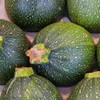
Tatume takes the pressure off by giving you two completely different harvests. For a crisp summer squash, start picking around 45 to 60 days when the round fruits hit the size of a baseball. Always cut them cleanly with a knife in the early morning, leaving a short stem—twisting tears the vine and invites rot. Keep picking, and the plant will keep producing.
If a few hide under the leaves and get too big, or you just want to stock up for winter, leave them alone. The skin will harden into a tough rind, and the fruit can swell to the size of a soccer ball. Once you can't pierce the skin with your thumbnail, it’s ready. Cut it, leaving a two-inch stem, let it cure in the sun for about a week, and it will happily sit on a cool, dark pantry shelf for months.
Learn More
From the soil to the seed to the food you eat - we'll help you grow your best garden!
Related Products
Related Products
Early Summer Crookneck Squash Seeds - (Cucurbita pepo)

Tonda Nizza Summer Squash Seeds - (Cucurbita pepo)

Cocozelle Zucchini Summer Squash Seeds - (Cucurbita pepo)

Golden Zucchini Summer Squash Seeds - (Cucurbita pepo)

Black Beauty Zucchini Summer Squash Seeds - (Cucurbita pepo)

