
Red Corn Poppy Seeds - (Papaver rhoeas)

- SKU:
- F1181
- Seed Count:
- Approx 200 seeds per pack
- Type:
- Annual
- Height:
- 12-30"
- Status:
- Heirloom, Non-Hybrid, Non-GMO seeds




Description
Red Corn Poppy - The Seed with a 100-Year Memory
This resilient, brilliant red flower teaches us that the earth and the seeds it nurtures have a long, patient memory. Many look at the seemingly fragile petals—thin and light as tissue paper, moving with the slightest breath of air—and see something delicate.
However, this ancient traveler is quite robust and is just quietly biding its time. These seeds can wait a century if they have to. If the rain doesn't come or you forget to weed, they don't die—they just clock out. They are patiently waiting for that one moment when you move the soil and let the sun hit them to begin their next growth stage.
While we’re enjoying the visceral splash of red, to pollinators it's a neon drive-in diner sign - "Eat at Joe's" - showing there's good food available, long before the rest of your garden is ready. Growing the Red Corn Poppy isn't just about the color; it’s about learning to trust the resilience of the system.
Details
Walk out to a patch of Red Corn Poppies in the morning, and one of the first things you’ll see is the petals—they look like they’re made of crushed silk, so thin and light that the early sun practically glows right through them. This might look like a fragile ornamental, but once you’ve grown them, you’ll know better. If you run your fingers down one of those stems, you won’t feel silk. You’ll feel resilience.
The whole plant, which stands about 12 to 30 inches tall and roughly a foot wide, is covered in these stiff, sandpaper-like hairs—they’re properly called hispid trichomes. They aren’t there for decoration; they’re a biological cooling system and a layer of armor. The leaves themselves are a soft, dusty green and deeply lobed, giving the plant a wild, slightly rugged appearance that balances the exuberance of the blood-red blooms. The Red Corn poppy handles the friction of the wind and the heat without the need for coddling.
The poppy is a specialist beneath the soil, growing a delicate herringbone-patterned taproot that looks like a single, straight anchor with very little side-branching. That root is the hydraulic engine, and it’s why poppies are so fiercely independent. It’s also why you can’t buy a poppy start from a nursery. If you try to transplant it, you’ll disturb the root, and the whole plant collapses.
This deep root system is why you should be careful about growing in small containers. While it can survive in a 5-gallon-sized container, for this poppy to thrive, use at least a 10 or 15-gallon container. This extra volume gives you the stable soil moisture reserves of the deep soil it prefers. If you have the space for a 50-gallon planter, use it - this becomes a small "meadow in a box" with the mass needed to keep the soil temperature and moisture steady all season long.
The most incredible part of the story, though, is the invisible one. To our eyes, each flower is a deep splash of red, but to a bee, it’s an ultraviolet landing strip. They are a signal for every pollinator in the neighborhood, showing where the food is. By flowering early, these poppies ensure your garden is already a major hub for pollinators weeks before your tomatoes or squash even think about blooming. You are essentially pre-loading your pollination network, so the workers are already active and on-site when your food crops hit their stride.
These poppies are temperature sensitive—if it’s above 86°F for too long, the delicate filaments in the flowers suffer heat damage, essentially stopping seed production. While the plant might still throw out a few blossoms, they will be infertile and cannot produce viable seeds for next season.They grow as hardy annuals across a wide USDA Zone range of 3-10. In cool winter climates, this is a classic summer annual, but in warm winter climates with high-heat summers, grow poppies as a winter annual, sowing in the early fall while the air is still crisp and the flowers can stay cool.
History
To understand the Red Corn Poppy, look back through the centuries to its home in the sun-baked, rocky soils of the Mediterranean and Southwest Asia. We often think of it as a European native, but it’s actually an ancient traveler that hitched a ride across Eurasia with the very first farmers of the Neolithic period. As humans began to turn the earth to plant wheat and barley, the poppy was right there on the edges, waiting for its moment. It evolved specifically to thrive in the disturbance of a working field, earning the name “follower of the plow.”
Earliest historical records document this partnership - the ancient Egyptians prized the poppy for its quiet strength, weaving the bright red petals into funeral wreaths—like those found in the tomb of Ramesses II—as symbols of a deep, cyclical rest. To the Greeks and Romans, it was sacred to Ceres and Demeter, the goddesses of the harvest. Back then, a bright red field full of poppies signaled that the soil was alive and the land was productive.
The ancient legacy of being the guardian of disturbance is what set the stage for the famous poem "In Flanders Fields", written by Canadian Lieutenant Colonel John McCrae, a field surgeon who noticed the bright blooms in the trenches and fields near Ypres, Belgium, in May of 1915. Most of us see those vast carpets of blood-red poppies as a symbol of loss, and they certainly are. English and Europeans call them “remembrance poppies”. Looking through the eyes of the flower, however, we learn a different story. When artillery and trenches churned the soil in Belgium and France, it didn’t destroy the poppies—it woke them up.
Those seeds had been sitting in the dark for perhaps a hundred years, essentially holding their breath in a state of dormancy called photoblastic. They were waiting for exactly two things: for the soil to be turned and for the light to hit them. When Lieutenant Colonel McCrae noticed them in 1915, he was seeing the only thing capable of healing the wounds of the earth so quickly. While the world was focused on the destruction of the landscape, the poppy was focused on its job, immediately colonizing the broken ground to stabilize the biology and bring life back to a wounded field.
You aren't just growing a flower from a poem; you’re growing a specialist that has seen every upheaval for a thousand years and knows exactly how to wait in the dark until you move the earth and give it the sun.
Uses
In the kitchen, the blood-red petals offer a sweet, vibrant contrast in fresh salads. Once the pods have dried to the texture of parchment, the nutty seeds serve as a traditional staple for baking, providing a delicate, earthy crunch.
Ornamental Uses
A patch of these poppies in full bloom provides an honest, deep red splash of color in garden beds, borders, or open meadows. They offer a rugged, vertical architecture that balances out softer, lower plants. While the silk-like blooms are fleeting, they serve a much larger purpose than just looking good; they act as a biological beacon. They are usually the first things the bees notice in the spring, drawing them into your yard and training them to visit well before your summer vegetables even think about flowering.
Companion Planting
Plant poppies alongside lettuce, spinach, onions, and garlic to draw in beneficial insects and help manage pests. Flowering herbs like dill and coriander are also excellent partners for boosting pollinator activity.
Avoid planting near the Brassica family (cabbage, broccoli, kale, and cauliflower), as these plants can release chemicals that inhibit each other’s growth.
Planting and Growing Tips
The Red Corn Poppy must be direct sown. Because of its single, anchor-like taproot, it will not survive being moved or transplanted. These seeds require light to germinate; do not bury them. Simply press the seeds firmly into the surface of the soil.
In cool winter climates, sow in the very early spring. In warm winter climates with high-heat summers, sow in the early fall. To trigger germination, ensure you have shallowly cultivated and disturbed the soil surface so the seeds have direct contact with the earth and sun.
Harvest Tips
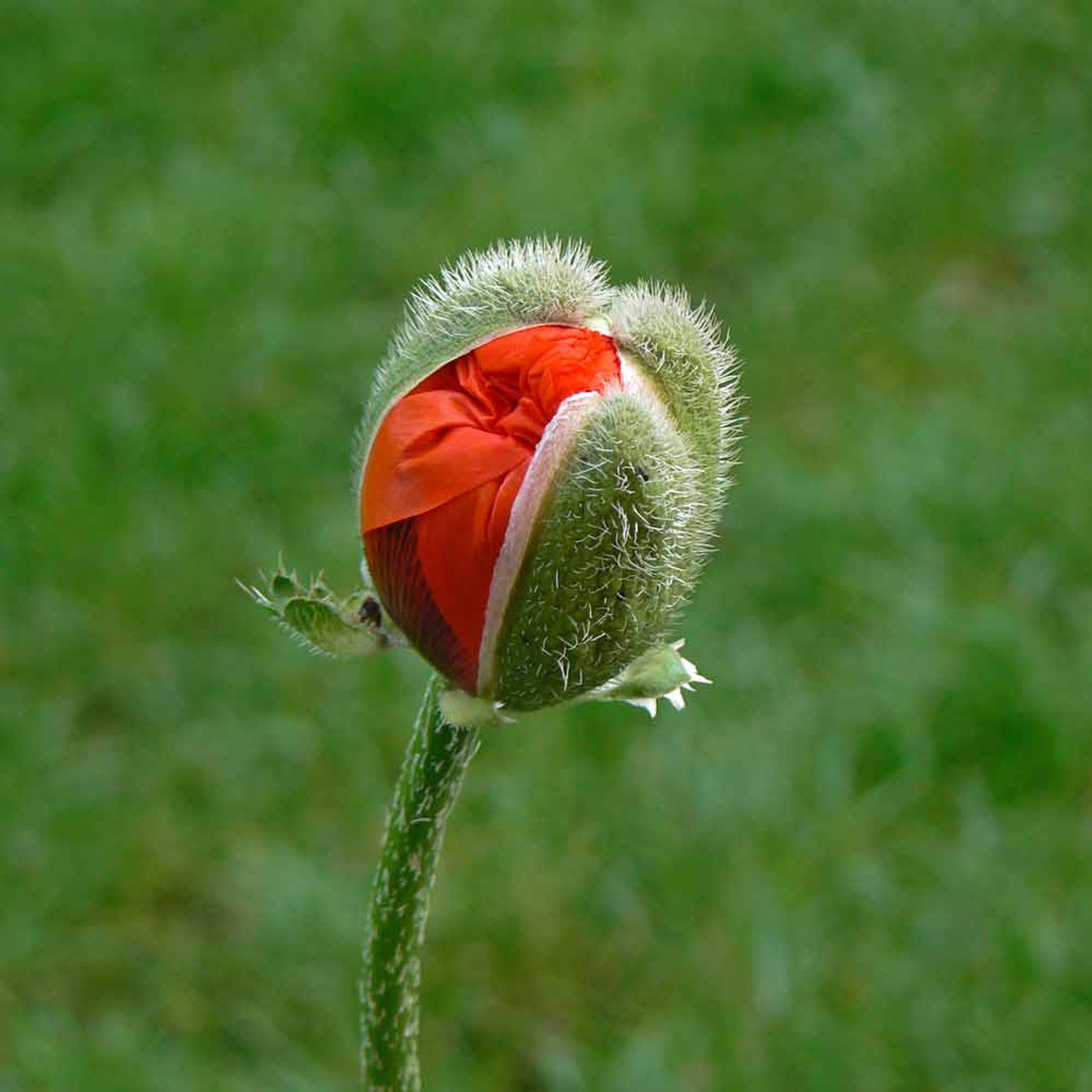
For cut flowers, harvest just as the red silk begins to peek through the green bud casing. For seed saving, wait until the flower petals have fallen and the pod has turned a dusty brown. When the pod feels like stiff parchment, and you can hear the seeds rattle inside when shaken, they are ready to snip and store.
Learn More
From the soil to the seed to the food you eat - we'll help you grow your best garden!
Related Products
Related Products

Single Mixed Corn Poppy Seeds - (Papaver rhoeas)

Spectacular Breadseed Poppy Seed Mix - (Papaver somniferum)

Broom Corn Seeds - (Sorghum vulgare)

Hopi Blue Corn Seeds - (Zea mays)

