
Everbearing Cucumber SMR58 Seeds - (Cucumis sativus)

- SKU:
- V1042
- Seed Count:
- Approx 35 seeds per pack
- Days to Maturity:
- 60 days
- Days to Germination:
- 5-7 days @ 75-95F
- Plant Spacing:
- 18-24"
- Light Preference:
- Full sun
- Status:
- Heirloom, Non-Hybrid, Non-GMO seeds




Description
Everbearing Cucumber SMR58 - The Standard for the Best Home Pickle
The best thing to happen to the home garden cucumber came from a systemic failure that almost ruined the American pickling industry, yet the solution was so good that it became the benchmark. In the 1950s, a team of researchers at the University of Wisconsin took on an agricultural crisis and turned it into the single biggest win for anyone who loves fresh-picked cucumbers and snappy pickles. They bred a cucumber that survived the scab and mosaic viruses, and it’s been quietly producing in home gardens for over seventy years.
Details
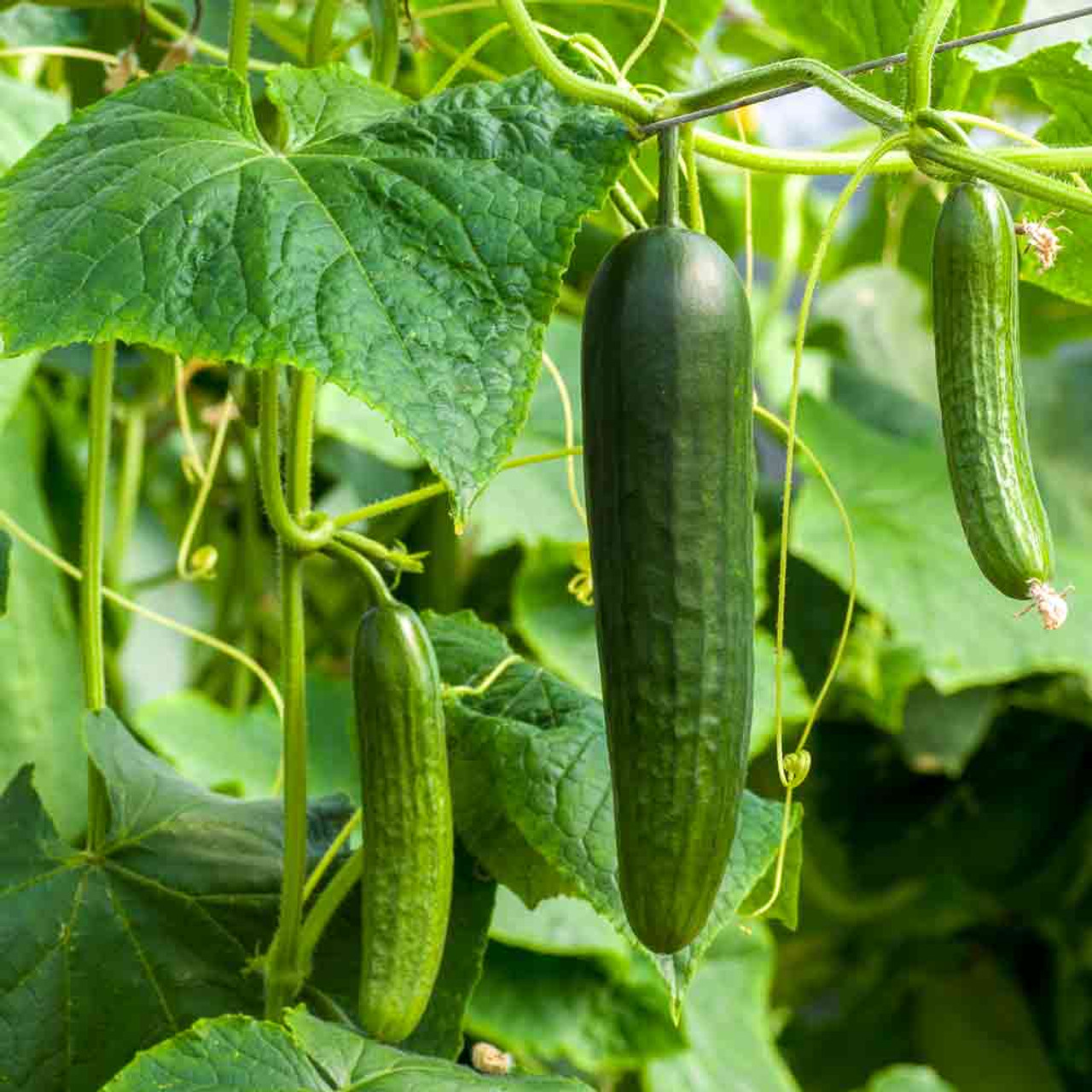
The Everbearing Cucumber SMR58 is a vigorous, indeterminate vine that will ramble six to eight feet across if not trellised. The stems are thick and incredibly rough, feeling almost like sandpaper because they are covered in short, stiff hairs that act as a first line of defense against pests. The leaves are large, triangular, and deep green, with a coarse, scratchy texture that creates a layer of still air against the leaf surface to help the plant hold onto its moisture during a dry spell. Tight, curling tendrils emerge from the stem near every leaf joint; these are specialized search-and-lock mechanisms, searching for a trellis, fence, or netting, making it ideal for larger containers with good soil volume. Growing vertically improves the airflow through the leafy canopy, reducing the chance of mildew.
Golden-yellow flowers appear in the leaf joints, starting with males to attract pollinators, followed by females that carry the tiny, developing cucumber at the base. The fruit begins as small nubs covered in the variety’s signature black spines—an heirloom feature that acts as solar armor by soaking up UV radiation to prevent sun-scald. Each mature fruit is a blocky, forest green cylinder with faint, light-green streaks near the tip. It is harvest-ready in about 50-to-60-days.
The strength of this plant is in its powerful taproot. The Everbearing Cucumber drives a powerful taproot up to four feet into the soil to find consistent moisture and nutrients. This gives the vine a massive advantage: it can lift water from deep underground to keep the leaves and fruit from wilting when the heat hits. That steady water supply is what builds the legendary crunch of this cucumber; the cells are built with a tightly knit internal framework that stays snappy even after they’ve been pickled.
The SMR in the name stands for Scab Mosaic Resistant, which serves as a built-in insurance policy against two of the most destructive threats in the garden. Instead of requiring external sprays, the plant is hard-coded to handle these problems internally. It is designed to wall off Scab—a fungal rot—at the point of contact, and it carries a natural defense that stops the Mosaic Virus from spreading through its nutrient lines.
History
The Everbearing Cucumber variety was developed during a time when diseases were nearly wiping out entire harvests across the country. In the early 1950s, gardeners and farmers were watching their vines turn to mush with no way to stop it. Dr. J.C. Walker at the University of Wisconsin realized that the only way to save the crop was to rebuild the plant from the inside out. He took rugged local varieties and bred them with ancient, resilient travelers from Asia that had been surviving environmental stress for centuries. The result, released in 1958, was a complete turnaround for anyone growing cucumbers, providing a level of reliability that we still rely on today.
But the Everbearing isn't just a mid-century survivor; it is a chapter in a 5,000-year history book. Its ancestors were bred in the Himalayan foothills and captured the obsession of the Roman Emperor Tiberius, who demanded cucumbers at his table every day of the year. Roman engineers even built the world’s first cold frames on wheeled carts to protect the vines from the winter chill. This heirloom is the result of that dedication—a variety built to solve problems and released into the public domain so that any gardener can taste its legacy.
Uses
The Everbearing cucumber is the undisputed champion of the pickling jar because it’s built with a small, tight seed cavity and dense flesh that absorbs brines and stays snappy without turning to mush over long-term storage.
The blocky shape makes it the perfect fit for whole dills or sweet chips that keep their crunch even months later. Beyond the jar, if you harvest them young at about four inches, the thin skin and bright flavor make them a sweet, crisp addition to salads, sandwiches, or cold soups.
Companion Planting
Everbearing Cucumber thrives when it’s part of a neighborhood watch system, using its neighbors to handle the pests it cannot fight alone.
Beneficial Companions: Dill is the primary partner; its flowers act as a beacon for beneficial wasps that hunt the beetles carrying "Bacterial Wilt." Beans are the high-octane fuel providers, adding nitrogen back into the soil to support the vine’s massive growth. Marigolds serve as the ground-level security, masking the cucumber’s scent from aphids.
Antagonists: Keep fennel and sage in a different part of the garden; fennel can stunt the vine’s growth, and sage prefers dry soil that would leave your cucumber thirsty.
Biological Shade: Because of its vertical reach on a trellis, you can use the vine as a "living wall" to provide afternoon shade for shorter, heat-sensitive crops like lettuce or radishes.
Planting and Growing Tips
This vine is a high-reaching system that needs a deep well and plenty of headroom. You have to grow these vertically on a sturdy trellis; getting them off the ground allows air to move freely through the canopy, which avoids the stagnant, humid pockets where mildew likes to start. Because these plants have such a sensitive, deep taproot, it is best to sow the seeds directly into warm soil (70°F or higher), spacing them 12 to 24 inches apart. Once they are growing, use a thick layer of mulch to keep the soil moisture steady; if the water levels swing too much, the fruit can hollow out and lose that signature crunch.
Harvest Tips
To keep this everbearing vine producing all season, you have to stay ahead of the plant’s natural cycle. If you let a cucumber grow until it’s huge and yellow, the plant thinks its job is done and stops making new flowers. By picking them frequently at the four-to-six-inch stage, you trick the vine into a state of perpetual production. It’s always best to harvest at dawn when the cucumbers are at their peak crispness. When you pick, use a sharp knife or shears to cut the stem rather than pulling or twisting, which can damage the plant’s internal nutrient lines and invite disease.
Learn More
- Armenian Cucumber - Best Burpless Heirloom Cucumber
- Achocha - the Unknown Cucumber Relative
- Cilantro Freezer Pickles
From the soil to the seed to the food you eat - we'll help you grow your best garden!
Related Products
Related Products

True Lemon Cucumber Seeds - (Cucumis sativus)

Beit Alpha Cucumber Seeds - (Cucumis sativus)

Boston Pickling Cucumber Seeds - (Cucumis sativus)

Suyo Long Cucumber Seeds - (Cucumis sativus)

