
Purple Tomatillo Seeds - (Physalis ixocarpa)

- SKU:
- V1196
- Seed Count:
- Approx 25 seeds per pack
- Days to Maturity:
- 95 days
- Color:
- Purple
- Status:
- Heirloom, Non-Hybrid, Non-GMO seeds




Description
Purple Tomatillo - Deep Plum Sweetness with a Tropical Finish
If the Green Tomatillo is the "lime" of the vegetable garden, sharp and electric, the Purple Tomatillo is the plum - deep, complex, and surprisingly sweet. This is not just a different color of salsa ingredient; it is a bridge between the savory vegetable patch and the sweet fruit orchard. While green varieties are bred for consistent acidity, the Purple is defined by its "tropical finish," offering notes of pineapple and dark fruit that develop only when fully sun-ripened. It requires more patience than its green cousin, but the reward is a culinary ingredient that stands alone, whether sliced raw into a salad or slow-roasted into a salsa of remarkable depth.
The Purple Tomatillo is grown for its balance. It retains the ancestral trait of heat-activated sweetness, turning the sun's energy into deep violet anthocyanins and sugar.
Details
Careful breeding distinguishes this variety from the smaller, semi-wild 'De Milpa' types often found in foraging guides. Growers selected it for larger fruit size (reaching 1-2 inches, roughly the size of a golf ball) and easier handling, while retaining the intense sweetness and complex flavors of its wild ancestors. The plant is a vigorous, bushy, indeterminate sprawler that needs space and structural support, often reaching 3 to 4 feet in height and width.
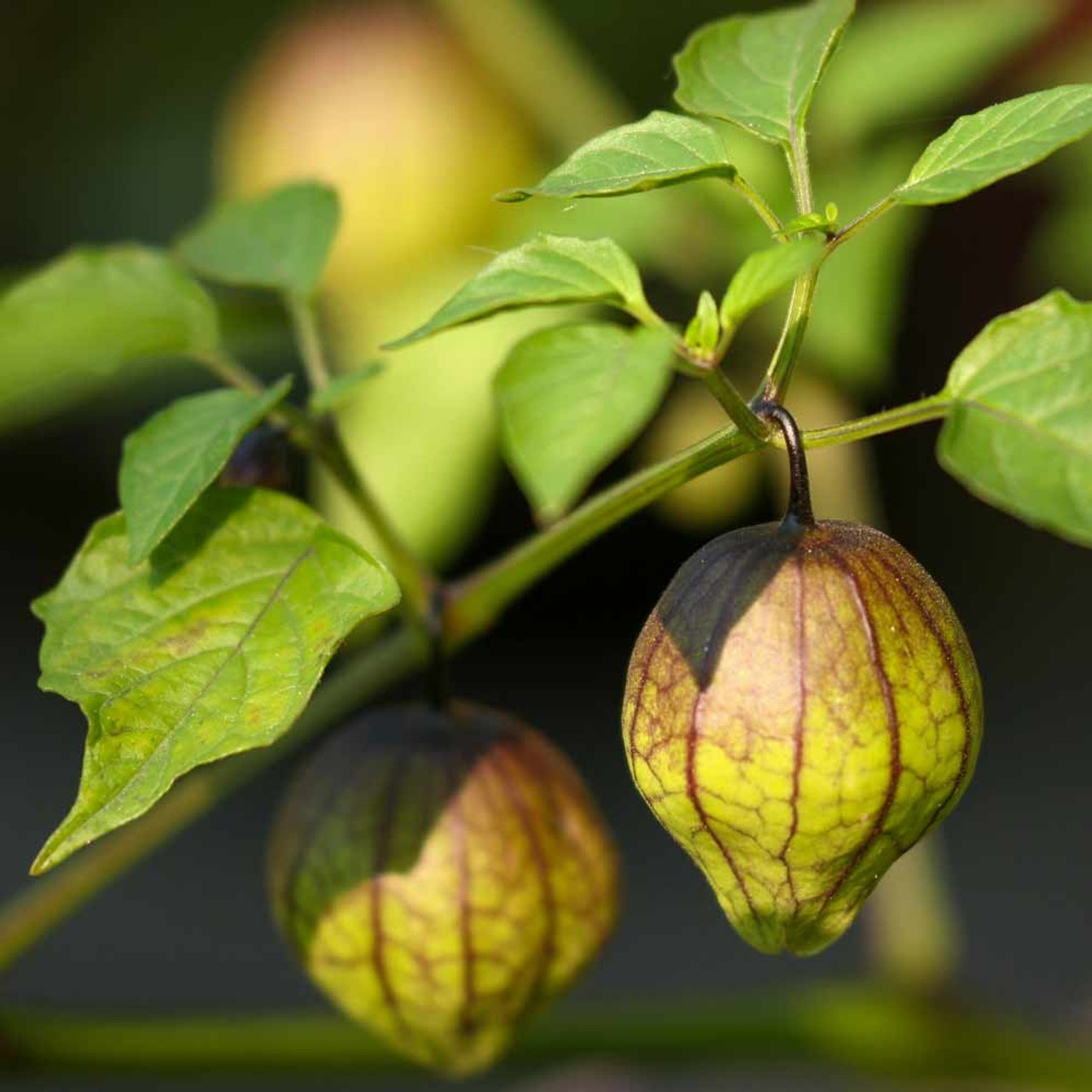
Light drives the ripening process of the Purple Tomatillo. Unlike green tomatillos, which are consistent regardless of exposure, this variety is light-activated. The fruit begins green, but as the husk splits and exposes the skin to the sun, the plant produces anthocyanins. These are the same pigments found in blueberries and purple cabbage; think of them as "nature's sunscreen," produced by the plant to protect the fruit from UV intensity. Consequently, the fruit often develops a mottled appearance: exposed areas turn deep violet-black, while shaded areas near the stem remain bright green or yellow. The interior flesh is typically a pale white-green, becoming tinged with purple as the fruit fully ripens.
The plant itself is visually striking. The stems frequently bear purple striations, a vegetative signal of the high pigment content. The leaves are shaped like jagged arrowheads and grow in a staggered pattern along the stem rather than in opposing pairs. In cooler temperatures or high light, the leaf veins often glow with a violet tint, making the plant highly ornamental even before fruit set.
USDA Hardiness Zones: 4-12. In Zones 4-8, grow it as a summer annual, and start seeds indoors 6-8 weeks before the last expected frost date. In Zones 9-12, it can be grown as a long-season annual or short-lived perennial, potentially overwintering if frost is avoided.
History
In 2017, a groundbreaking paleontological discovery in Patagonia, Argentina, revealed fossilized Physalis fruits—complete with their characteristic papery husks—dating back 52 million years to the Eocene epoch. This confirms that the tomatillo lineage is ancient, likely domesticated in Mexico long before the tomato. Archaeological evidence from the Tehuacán Valley suggests that tomatillo consumption and cultivation dates back to at least 900-800 BCE. The Aztecs were the primary cultivators, growing it in the milpa system—a traditional polyculture of maize, beans, squash, and chiles. Known as the miltomatl, it was valued for its tartness that balanced the heat of chiles, and its exceptional shelf life provided by the protective husk.
When the Spanish conquistadors arrived, they encountered both the xitomatl (large, red tomato) and the miltomatl (small, green husk tomato). The Spanish abbreviated both terms to tomate, leading to centuries of linguistic and botanical confusion. However, in Mexican cuisine and agriculture, the distinction remains clear: tomate usually refers to the tomatillo in central Mexico, while jitomate refers to the red tomato.
The Purple Tomatillo connects us to this indigenous agriculture, predating the standardization of the modern green varieties. While the green tomatillo was selectively bred for high acidity and industrial uniformity, the purple strains retained the "wilder" complexity. By growing this, you are preserving a living history that prioritizes the balance between savory and sweet, keeping alive a flavor profile that bridges the flavors between the vegetable garden and the orchard.
Uses
This variety functions as a "savory fruit" rather than a standard salsa ingredient. Its flavor profile begins with a mild citrus tang but finishes with deep notes of plum, pear, and mild grape, balancing the inherent citric acidity. It lacks the vegetal, herbaceous "grassy" note sometimes found in unripe green tomatillos. To access this "tropical finish," you must treat it differently from the Verde Tomatillo. Do not use high-heat charring or blistering, typically used for salsa verde, as this can create bitterness and destabilize the delicate sugars.
Instead, use the slow roast technique: roast slowly over indirect heat (or bake) to gently caramelize the sugars without burning the skin. This method unlocks the pineapple notes that define the variety. We recommend using it alone—do not blend it with green tomatillos, as the acid of the green will mask the purple’s nuance. It is excellent sliced raw into salads for a visual and sweet pop, or slow-roasted into a dark, complex salsa that pairs beautifully with grilled meats. Like the Verde, this variety is high in pectin, which acts as a natural emulsifier to create a silky, cohesive sauce without the need for added thickeners.
Companion Planting
Pair the Purple Tomatillo with Alliums like onions or garlic. These companions serve as a biological shield, using sulfur-based scents to confuse pests. Marigolds are another essential pairing, as they deter root-knot nematodes while attracting the pollinators necessary for fruit set. Basil effectively repels thrips and the tomato hornworm, while its scent masks the tomatillo from searching pests.
Cilantro supports the system by attracting beneficial insects like hoverflies and lacewings. Carrots utilize different soil depths, loosening the ground for the tomatillo's feeder roots while the tomatillo canopy provides shade to keep the soil cool. Strict weed control around the tomatillo patch—specifically removing horsenettle and ground cherry—breaks the "green bridge" that supports populations of the Three-Lined Potato Beetle.
Avoid planting near Fennel, which releases compounds that stunt growth. Gardeners should not plant tomatillos where other nightshades, like eggplant or potatoes, recently grew, to prevent the buildup of soil-borne pathogens.
Planting and Growing Tips
Start seeds indoors 6 to 8 weeks before the last frost, sowing 1/4 inch deep. Seeds require warmth to germinate; a heat mat set to 75-85°F ensures germination within 7 to 14 days. Once soil temperatures reach a consistent 65°F, transplant seedlings outdoors, spacing them 24 inches apart to facilitate cross-pollination. A well-drained, sandy loam provides the ideal environment, as these plants cannot tolerate saturated roots.
Monitor the undersides of leaves weekly for the Three-Lined Potato Beetle and its bright orange egg clusters. Crushing these clusters prevents larval outbreaks. Because larvae feed in groups, remove "nursery leaves" immediately to stop infestations before they spread. Apply beneficial nematodes—specifically Heterorhabditis bacteriophora—to moist soil at dusk to target the beetle's pupal stage, breaking the reproductive cycle in the soil.
While they withstand poor soil, they prefer moderate fertility. Excessive nitrogen promotes lush leaves at the expense of fruit. Full sun is critical, as the plants need 6 to 8 hours of direct light to drive the energy required to fill the husks. In particularly hot climates, providing light afternoon shade helps the plant thrive and reduces environmental stress. Consistent moisture ensures a high-quality harvest; use drip irrigation to keep foliage dry and reduce the risk of powdery mildew.
The tomatillo is a hub for specialized biodiversity. The flowers require sonication, or buzz pollination, where the anthers only release pollen when vibrated at a specific frequency. This makes native bees—like the Broad-footed Cellophane Bee and the Ground Cherry Fairy Bee—as well as bumblebees, the most effective pollinators. By planting tomatillos, you create a sanctuary for these specialist pollinators.
Harvest Tips
Harvesting the Purple Tomatillo requires patience—it is not ready when the husk splits, but rather when the sun has fully charged the flavor. While green varieties are harvested based on size,the Purple relies on color. First, wait for the husk to become dry and papery. Second, check the skin.
If the fruit is still green or has green "shoulders" near the stem, it has not yet developed its full sugar content. Gently pull the husk back; you are looking for a deep, consistent violet color. For maximum sweetness and the signature plum flavor, allow the fruit to hang on the plant for another 5-7 days after the husk splits to let the anthocyanins fully activate. If you harvest early, you will have a perfectly edible, tart fruit, but you will miss the "pineapple" finish.
Off-Vine Ripening: If frost threatens or fruits fall prematurely, collect them with husks intact and place them in a single layer in a bright, warm window. They will continue to deepen in color and sugar content, though not as intensely as on the vine.
From the soil to the seed to the food you eat - we'll help you grow your best garden!
2 Reviews
-
Purple Tomatillo
I haven’t grown this yet, but I certainly will this year! I’ve grown, or allowed volunteers to grow of the Pineapple Tomatillo of which I am fond. I make jam with it. I am really excited to grow the Purple Tomatillo and make some jam with it! Roasting the fruits is a great tip - thank you!
-
Purple Tomatillos
Really good flavour. Very productive plants. Great for salsas.
Related Products
Related Products

Verde Tomatillo Seeds - (Physalis ixocarpa)

Aunt Molly's Ground Cherry Seeds - (Physalis pruinosa)

Cherokee Purple Tomato Seeds - (Lycopersicon lycopersicum)

Purple Coneflower Echinacea Seeds - (Echinacea purpurea)

