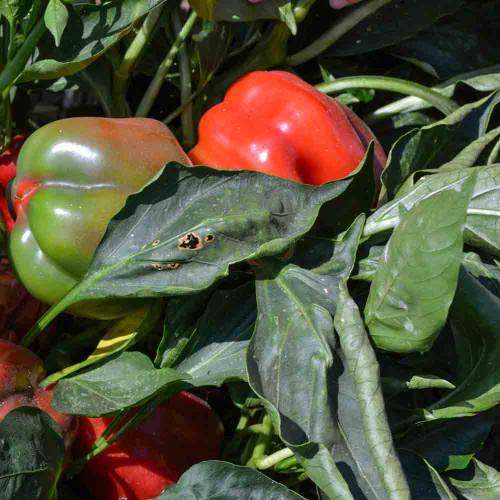
Cubanelle Sweet Pepper Seeds - (Capsicum annuum)

- SKU:
- V1520
- Seed Count:
- Approx 25 seeds per pack
- Days to Maturity:
- 62-70 days
- Type:
- Sweet
- Days to Germination:
- 14-21 days @ 75-95F
- Light Preference:
- Full sun
- Plant Spacing:
- 18"
- Status:
- Heirloom, Non-Hybrid, Non-GMO seeds




Description
Cubanelle Sweet Pepper – The Caribbean Frying Pepper
The Cubanelle is “thin-skinned” - in more ways than one - and that’s exactly why you want it in your garden. This pepper is a contradiction - its greatest vulnerability in the garden becomes its greatest strength in the kitchen. You won’t find this pepper in the supermarket; it’s rare even in well-stocked farmers’ markets. That’s because breeders didn't select it to be trucked far away; they bred for the hot skillet. The walls are thin and low in moisture, allowing it to conduct heat instantly. It doesn't steam; it fries, caramelizing sugars and building flavor in minutes.
It is a prolific, early-ripening fruit that isn’t just a salad ingredient; it is a specialized ingredient for the cook who values efficiency and flavor over uniformity.
Details
The Cubanelle is a paradox in the garden. Think of the Bell Pepper as an insulator and the Cubanelle as a conductor. Most gardeners know the Bell, which has thick, water-heavy walls. When you throw a Bell in a pan, it has to "sweat"—boiling off its own internal water—before it can even think about browning.
Visually, it mimics a "stretched" blocky pepper—about 4 to 6 inches long with a blunt end. The skin is wrinkled and irregular, which is a good thing; it’s a sign of heirloom genetics that prioritize flavor over the cosmetic perfection of supermarket varieties. Don't confuse it with the Banana Pepper, which is waxy, pale yellow, and tangy. The Cubanelle is glossy, vibrant lime-green, and distinctly sweet.
You can read the flavor by the color. The immature lime-green peppers are your "frying stage"—crisp, firm, and slightly tannic. As it ripens, the red stage marks full maturity. The pepper turns fire-red, the texture softens, and the sweetness peaks.
History
The name "Cubanelle" translates to "Little Cuba," which signals exactly where this pepper earned its stripes in the Greater Antilles (Cuba, Dominican Republic, Puerto Rico). While it originated in South America like all Capsicums, growers refined this specific lineage in the Caribbean, where it became the Aji Cubanela, a staple crop bred to withstand tropical heat.
Its journey to your garden, however, likely passed through an Italian kitchen in the US. In the late 19th century, Italian immigrants in New York sought the sweet frying peppers of Naples (like the Friggitello) but found them unavailable. In the Caribbean markets of the city, they found the Cubanelle—a pepper that looked different but behaved exactly like the peppers of Naples in hot olive oil.
Cooks adopted it for two simple reasons: flavor and efficiency. In both Caribbean and Italian peasant kitchens, fuel (wood or charcoal) was precious. You didn't waste it stewing a thick-walled pepper for an hour. Cooks preferred the Cubanelle because it surrendered its flavor in minutes.
Uses
Though history defines it as a "frying pepper," the Cubanelle actually plays a utility role in the kitchen. Its superpower lies in its sweetness; even when green, it’s fruity and crisp.
Because it lacks that bitter "green" edge, use it raw where a Bell would be too harsh. Chop it into salads, layer it onto sandwiches for crunch, or use it as a vessel for dips. It works exceptionally well as a fresh, cooling topping for tacos and grain bowls, or diced into a bright salsa.
The frying pan remains its primary territory. When sautéed in olive oil, the skin turns papery and the flesh becomes creamy, acting as a binder for onions and sausage. It excels as a pizza or sub topping because its low moisture content prevents it from "wetting out" the dough; it roasts dry and sweet.
The thin walls cook rapidly, making it ideal for stuffing. You don't have to pre-roast the pepper to get it tender. Try it with rice and meat, or go the Sicilian route: stuffed with breadcrumbs and pine nuts. In Naples, they simplify it further, stewing it down with tomatoes, garlic, and onions until it melts.
In Caribbean cooking, the Cubanelle provides the "body" of the Sofrito. It acts as a neutral-sweet canvas that carries the volatile oils of garlic and cilantro without making the paste bitter. It also holds its own in heavier, complex sauces like Mole or winter stews.
The Cubanelle pairs well with rich fats and warm spices. Match it with chorizo, turkey, or beef, and season with cumin, cloves, cinnamon, and paprika. It thrives with aromatics—especially ginger and thyme—which highlight its subtle fruity notes.
Companion Planting
The Cubanelle has an Achilles heel: Sunscald. Because the skin is so thin, the fruit can literally sunburn if left exposed. It needs a "buddy system" to survive the afternoon heat.
Plant taller crops like Okra on the western side of your pepper rows. The Okra loves the heat and throws a long shadow that shields the peppers during the hottest part of the day. At the base, plant Basil and Oregano. They act as a living mulch to keep the soil moisture consistent—which is critical for preventing rot—and create a humid microclimate.
Planting and Growing Tips
The fruit needs shade. Your goal is to grow a dense, leafy canopy that protects the hanging peppers. If you live in a high-UV zone (Zone 9+), the plant cannot stand alone; it needs the "buddy system" of intercropping or shade cloth.
Harvest Tips
Timing is just as important as color. Harvest during early to mid-morning. The plant has rested overnight, and the fruit is at its peak—plump, crisp, and full of moisture. If you wait until the late afternoon, the heat of the day will have stressed the plant, leaving the peppers slightly dehydrated and limp.
When you harvest, never pull or snap the fruit off by hand. The stems are tough, and pulling often tears the main branch, leaving a jagged wound that invites disease. Always use a sharp knife or garden scissors to make a clean cut just above the cap.
You have two harvest windows depending on your kitchen needs. For frying, harvest the fruit when it looks like a highlighter—bright yellow-green. The flesh is crisp and holds up best to high heat.
For fresh eating, leave it on the plant until it turns deep red. At this stage, the skin becomes paper-thin and the sugars peak, but handle them gently—they bruise easily.
Learn More
- Growing Peppers 101
- Chile and Pepper Growing Tips
- Grow Better Peppers with Shade
- Growing Quality Heirloom Chiles
From the soil to the seed to the food you eat - we'll help you grow your best garden!
Related Products
Related Products

Nadapeno Sweet Pepper Seeds - (Capsicum annuum)

Jupiter Sweet Pepper Seeds - (Capsicum annuum)

Melrose Sweet Pepper Seeds - (Capsicum annuum)

Jimmy Nardello Sweet Pepper Seeds - (Capsicum annuum)