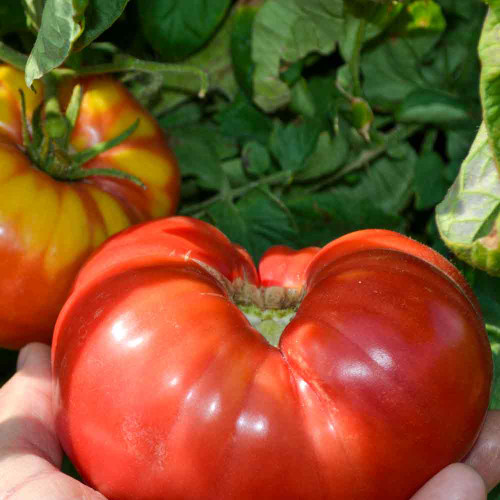
Red Brandywine Tomato Seeds - (Lycopersicon lycopersicum)

- SKU:
- V1150
- Seed Count:
- Approx 25 seeds per pack
- Days to Maturity:
- 80-100 days
- Type:
- Indeterminate
- Size:
- Beefsteak
- Leaf:
- Regular
- Color:
- Red
- Days to Germination:
- 5-7 days @ 75-95F
- Light Preference:
- Full sun
- Plant Spacing:
- 12"
- Status:
- Heirloom, Non-Hybrid, Non-GMO seeds



Description
Red Brandywine Tomato - Reliable Yields, Historic Flavor
The definition of "Old-Fashioned" heirloom tomato flavor isn't sugar; it's balance. While its famous pink cousin gets the attention, the Red Brandywine is the one that actually filled the Amish pantries. This is the "Founding Father" of the lineage—a savory, high-acid masterpiece from 1885 that offers the prestige of the Brandywine name backed by the vigorous production of a true workhorse. If you are ready to graduate from simple sweetness to complex, savory flavor depth, this is your tomato.
Details
This isn't just a red version of the famous Pink Brandywine; it is a completely different animal. While the Pink Sudduth’s strain has those distinct potato-like leaves, the Red Brandywine builds a dense canopy of regular, serrated foliage—the tell-tale sign of the authentic Landis Valley strain. That heavy leaf cover acts like a solar panel to fuel growth, but it also serves a practical purpose: it shields the fruit from sunscald, a trait likely selected by early farmers dealing with hot Pennsylvania summers. The vines are vigorous climbers, often reaching 6–9 feet, so you’ll need a strong trellis to hold up the heavy, thick stems.
The fruit is more uniform than its pink cousin, usually round to slightly flattened, with some ribbing at the shoulders that marks it as a true heirloom. They typically weigh in at 8 to 12 ounces, but if you have your soil dialed in, don't be surprised to see 1.5-pounders. The skin is incredibly thin. That’s perfect for eating, but it means they bruise easily—which is exactly why you’ll never find a real Brandywine in a supermarket. They ripen to a deep, vibrant scarlet, though some fruit may keep their green shoulders in high heat.
Flavor-wise, this is about old-fashioned intensity, not just sugar. It’s driven by a robust acidity that balances out the sweetness. It doesn't have the wine-like flavor of a purple tomato, but it delivers a clean, savory kick that some gardeners describe as a "sweeter Stupice." When you slice it, you might catch a subtle floral scent—almost like a rose—which is a layer of complexity you just don’t get in modern breeding.
History
The Red Brandywine is the "Founding Father" of the lineage, with roots tracing back to 1885 in Chester County, Pennsylvania. The name anchors it to the Brandywine Creek and the rich, fertile loam of the Delaware Valley. Unlike many heirlooms that are loosely marketed as "Amish" with no proof, this variety has a documented link to the Pennsylvania Dutch communities. It was bred for the rigorous demands of their kitchen gardens, where a tomato had to earn its keep. It needed to be productive enough to feed a large family and acidic enough to be safely canned in a water bath.
We almost lost this variety entirely. In the late 20th century, Tom Hauch retrieved the seed from the Seed Savers Exchange, recognizing it as the original Chester County tomato. He passed that stock to Steve Miller at the Landis Valley Village & Farm Museum, who protected it and kept it pure. That simple chain of custody—from Amish farmers in 1885 to Tom Hauch, to Steve Miller, and now to us—is a perfect example of how fragile our food heritage is. It only survives because individual gardeners made the choice to save it.
Uses
Think of the Red Brandywine as a structural ingredient. Its high acidity provides the backbone you need for savory cooking. It shines in the traditional Pennsylvania Dutch Tomato Pie, where that sharp acid cuts right through the richness of the cream and custard.
For preservation, this is a top-tier choice for water-bath canning (though always verify with a pH meter) because the acidity acts as a natural preservative. In sauces, it reduces down to a complex, rich concentrate that holds its own against heavy herbs like oregano. If you are eating it fresh, try slicing it with fatty cured meats or rich cheeses; the acid acts as a palate cleanser rather than just a sweet treat.
Companion Planting
While tomatoes are self-fertile, their pollen is trapped inside the flower and needs vibration to release. Native bees, like bumblebees, are experts at this "buzz pollination," which can significantly increase your yield. That’s why you should always plant nectar-rich flowers nearby—to recruit them.
Good Companions: Start with Basil to repel hornworms. Use French Marigolds to suppress root-knot nematodes and Borage to attract pollinators and predatory insects.
Bad Companions: Keep them away from Brassicas (Kale, Cabbage), which compete for the same nutrients. Also, avoid planting near Potatoes, since they share susceptibility to the same blight diseases.
Planting and Growing Tips
Tomatoes are heavy feeders, so you need high-quality compost to ensure the soil is nutrient-rich. Seeds germinate best when soil temperatures are between 75°F and 85°F.
Don't let these vines sprawl on the ground. Use heavy-duty trellises or strong wire cages to keep the fruit clusters elevated. Skip the standard hardware store "tomato cones"—they will just collapse under this plant's weight. They need a minimum of 6 to 8 hours of direct sunlight.
Short Season (Zones 3-5): Start seeds indoors 6-8 weeks before your last frost. Use black plastic mulch to warm the soil and row covers to get a head start. Hot Climates (Zones 9-11): You have to shift your strategy. Plant a spring crop early to set fruit before the June heat (90°F+) sterilizes the pollen. Then, sow a second crop in late summer for a fall harvest. You might consider shade cloth to protect the fruit from sunburn during the peak of summer.
Harvest Tips
For the deepest flavor, let the fruit ripen fully on the vine. This allows the plant to pump that final surge of sugars and nutrients into the tomato. However, if you see pests moving in or rain is forecasted (which causes cracking), harvest earlier and finish ripening them indoors. They will still be excellent, but the vine-ripened fruit is the gold standard.
Once harvested, never refrigerate your tomatoes. Temperatures below 55°F damage the cell structure and kill the flavor, turning the meat mealy. Always store them on the counter, stem-side down, until you’re ready to eat them.
Learn More
- Growing Tomatoes 101
- Determinate and Indeterminate Tomatoes - What's the Difference?
- Heirloom Tomato Growing Tips
- Heirloom Tomato Leaves - Potato Leaf vs Regular Leaf
- Blossom End Rot - What To Do
- Fermented Tomato Conserve
- Sicilian Eggplant and Tomato Sauce
From the soil to the seed to the food you eat - we'll help you grow your best garden!
Related Products
Related Products

Jubilee Tomato Seeds - (Lycopersicon lycopersicum)

Stupice Tomato Seeds - (Lycopersicon lycopersicum)

Floradade Tomato Seeds - (Lycopersicon lycopersicum)

Pineapple Tomato Seeds - (Lycopersicon lycopersicum)