

Bean
Beans are an ancient and highly valued food source. Originally cultivated in Central America from Mexico to Peru, Bolivia and down to Argentina. The smaller beans are thought to have been cultivated in Mexico as long as 7,000 years ago, while the larger beans were cultivated in Peru beginning about 8,000 years ago.
Most heirloom beans pair well with corn and squash, as they fix greatly needed nitrogen in the soil, and aid in the growth of a specific fungus that helps protect the corn from disease. The beans climb up the corn when planted closely, getting sun and in turn helping to anchor the corn against winds.
-
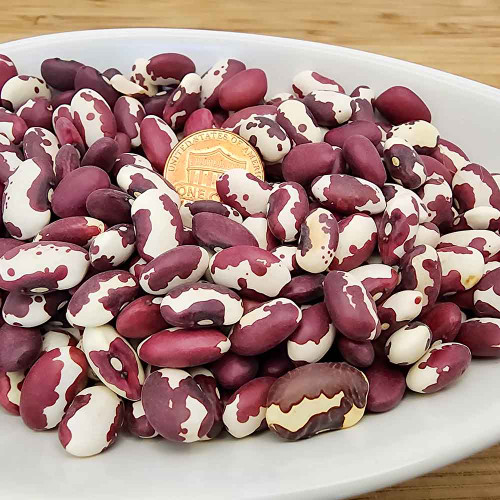
Anasazi Bush Bean Seeds - (Phaseolus vulgaris)
$3.60Anasazi Bush Beans - Creamy, Nutty, Sweet, and Unlike Any Bean You've Tasted We’ve loved this heirloom bush bean for a long time—before we were heirloom seed people. It is delicious and always grows well in our challenging, arid southwest...$3.60 -

Asparagus Green Podded Pole Bean Seeds - (Vigna unguiculata)
$3.90Asparagus Green Podded Pole Bean - The Best 'Green Bean' Isn't a Bean at All If you think of your summer garden as a long relay race, most beans are sprinters; they start strong but shift to survival when the temperature hits 90°F. But this is...$3.90 -

Broad Windsor Fava Bean Seeds- (Vicia faba)
$3.95Broad Windsor Fava Bean - Delicious Multipurpose Garden Worker One of the tastiest and largest of garden beans - often the size of a quarter - and perennially popular, especially in European kitchen gardens. Broad Windsor fava is an ancient legume,...$3.95 -

Four Sisters Garden Seed Collection
$15.00Four Sisters Garden Seed Collection – Less Weeding, More Flavor; An Ancient Tradition for Bountiful Harvests In the summer of 1912, a young scholar named Gilbert L. Wilson arrived at the Fort Berthold Indian Reservation in western North...$15.00 -

Golden Wax Bush Bean Seeds - (Phaseolus vulgaris)
$3.60Golden Wax Bush Bean - Discover Why "Buttery" Describes This Bean The Golden Wax Bush Bean is pure sunshine captured in a pod. Its vibrant, golden-yellow beans don't just brighten your garden rows with cheerful color; they bring a reliably sweet,...$3.60 -

Henderson's Baby Lima Bush Bean Seeds - (Phaseolus lunatus)
$3.60Henderson's Baby Lima Bush Bean Legend has it Henderson Baby Bush Lima bean was found growing along a Virginia roadside by a returning Civil War soldier, who collected and grew it. A very early, hardy, productive and disease resistant dwarf lima...$3.60 -

Kentucky Wonder Pole Bean (Brown) Seeds - (Phaseolus vulgaris)
$3.60Kentucky Wonder Pole Bean - Truly Satisfying Flavor: Snap, Shell, or Dry! Back in 1921, Stark Bros. declared of Kentucky Wonder, "...when cooked no bean is better." That outstanding heirloom flavor – rich, nutty, sweet, and often considered...$3.60 -

Lazy Housewife Pole Bean Seeds - (Phaseolus vulgaris)
$3.90Lazy Housewife Pole Bean Completely string-less beans. Brought to America by German immigrants and first listed in W. Atlee Burpee’s 1888 catalog. These beans were so-named because they were the first beans to not require...$3.90 -

Rattlesnake Pole Bean Seeds - (Phaseolus vulgaris)
$3.90Rattlesnake Pole Bean - Steadfastly Reliable with Excellent Flavor The Rattlesnake pole bean - also called rattlesnake bean and preacher bean - is forgiving to grow, easy to maintain, and a prolific producer, making them one of the best beans for home...$3.90 -

Tendergreen Bush Bean Seeds - (Phaseolus vulgaris)
$3.60Tendergreen Bush Bean- The Benchmark for Stringless Bush Bean For nearly 100 years, gardeners have relied on the Tendergreen bush bean for its consistent performance and classic flavor. Its excellence was recognized early with an All-America Selections...$3.60
