
Cherokee Sweet Mint/Hoary Mountainmint Seeds - (Pycnanthemum incanum)

- SKU:
- H1015
- Seed Count:
- Approx 50 seeds per pack
- Type:
- Perennial
- Days to Germination:
- 7-21 days at 60-70F
- Soil Requirements:
- Well-drained soil
- Plant Spacing:
- 18-24"
- Status:
- Heirloom, Non-Hybrid, Non-GMO seeds




Description
Cherokee Sweet Mint - Swap Your Spearmint for this Native Pollinator Paradise
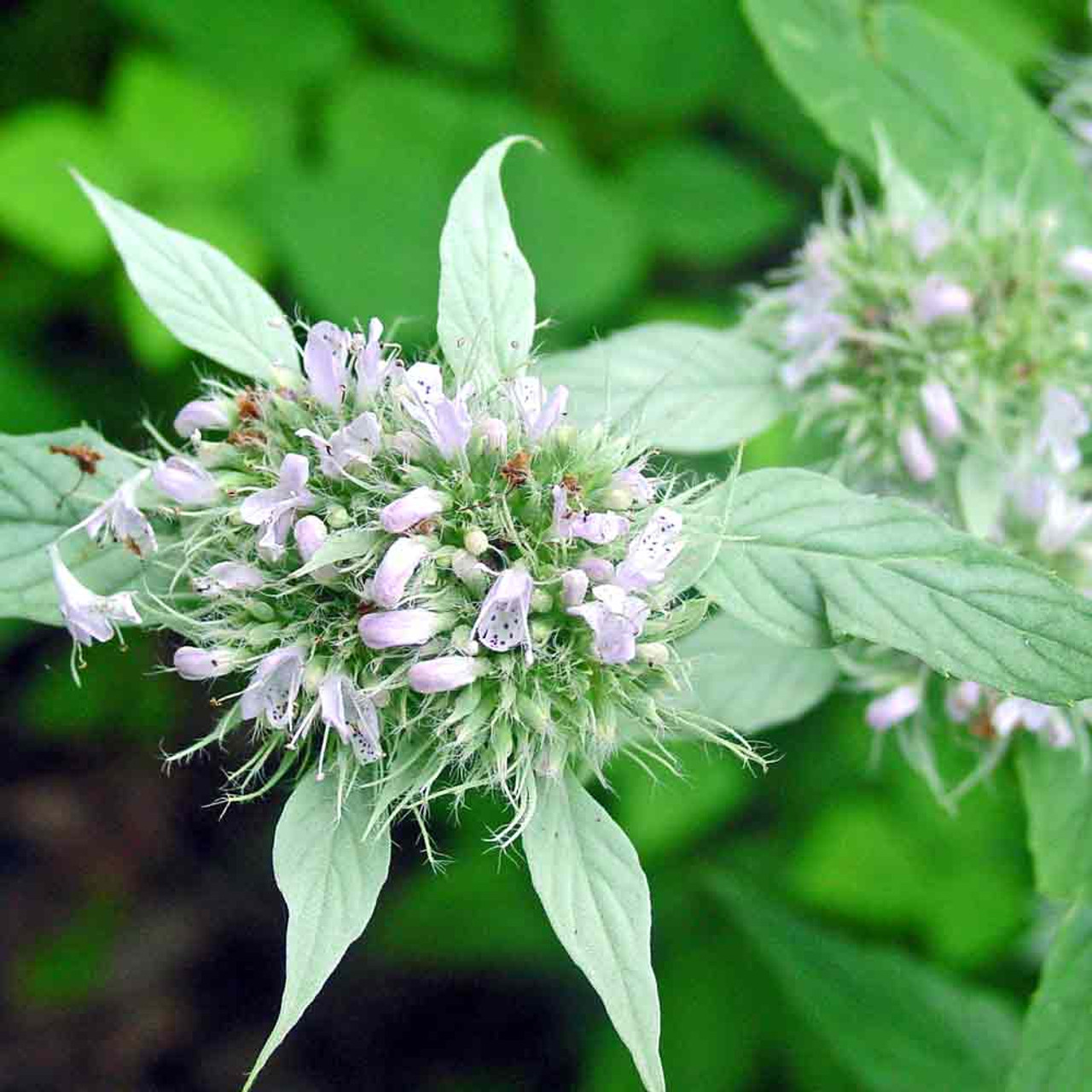
Cherokee Sweet Mint invites a new kind of vitality into the herb garden, combining the utility of a tea plant with the power of a pollinator sanctuary. While its European cousins are known for their aggressive spread, this native "Hoary Mountain Mint" offers a structural dignity, forming robust, manageable colonies that respect the garden's design. It is a stunning visual centerpiece, with silvery, frost-like bracts that shimmer in the summer heat, but its most profound contribution is to the living landscape. As one of the most effective pollinator magnets in North America, it acts as a bustling hub for beneficial insects, bringing dynamic movement to the garden while delivering an intense, sophisticated flavor that rivals any spearmint.
Details
Cherokee Sweet Mint, a North American native perennial, offers a dramatic departure from the more common, standard green mint. Scientifically known as Pycnanthemum incanum, and widely recognized as "Hoary Mountain Mint" or "Silver-leaf Mountain Mint," silvery-white, frost-like bracts distinguish this plant. They surround its lavender-white flowers, creating the illusion of snow in the height of summer. It is a substantial plant, growing upright on sturdy, square stems to a height of 2 to 5 feet, acting as a structural landscape element rather than a low-growing groundcover.
Unlike the aggressive runners of European mints (Mentha) that can erupt feet away from the parent plant, Cherokee Sweet Mint spreads via shallow rhizomes that knit together into a dense, slowly widening colony. As the plant prepares to flower, the upper leaves develop fine white hairs that reflect solar radiation, keeping the plant cool and reducing moisture loss in its preferred dry, rocky habitats.
While Virginia Mountain Mint offers a distinctly warm, resinous vanilla-mint aroma, Cherokee Sweet Mint delivers a high-menthol punch. The flavor profile is intense and sophisticated, carrying a strong, crisp peppermint punch with distinct, complex notes of menthol and earthiness. When crushed, the leaves release an aroma often described as "mintier than mint," differentiating it from the sweeter, milder spearmints. The plant emerges in mid-to-late spring, operating on a cycle of growth in early summer before transitioning to a spectacular flowering phase from July through September.
History
Long before European settlers introduced their own mint varieties, this plant was a trusted ally of the Cherokee people and other indigenous tribes of the Eastern Woodlands. Ethnobotanist James Mooney recorded its Cherokee name as gáw'sűkĭ sű΄tlĭ útana. They valued it not just for flavor, but as a powerful pharmacopeia—a living medicine chest used to create teas for respiratory ailments and fevers. André Michaux formally cataloged the plant in 1803, encountering "meadows" of it in Pennsylvania. While European mints eventually dominated the colonial kitchen, this native species remained a fixture of the wild landscape, a "living bridge" between indigenous knowledge and the American wilderness.
Uses
This is your "Native Spearmint." The flavor is clean, sweet, and intensely cooling, making it exceptional for brewing potent hot teas or iced infusions that require no added sugar to taste sweet. It excels when muddled into cocktails (like a native Mojito) or chopped into fruit salads where a bright, mentholated lift is required. In the kitchen, its intensity requires a lighter hand than common mints, but it adds remarkable depth to jellies or wild greens. Beyond the plate, utilize the leaves as a natural insect repellent; simply rub the crushed foliage on clothing to ward off ticks and chiggers during garden work.
Companion Planting
This plant is one of the most effective pollinator magnets available to the North American gardener. Ecological trials, including studies by Penn State University, have consistently ranked Pycnanthemum species as the top choice for the sheer diversity of insects they attract. The flowers' tiny purple spots act as "nectar guides," directing bees and wasps efficiently to the source.
More than just a feeder, it serves as a "docking station" for the garden's police force:
- Scoliid Wasps (Scolia dubia): These non-aggressive, blue-winged wasps frequent the flowers and are the primary predators of Japanese Beetle grubs.
- The Great Black Wasp: A docile giant that preys on katydids and grasshoppers.
- Tachinid Flies: Parasitic flies that help control tomato hornworms and stink bugs.
Plant this mint to fuel the predators that control your vegetable garden's pests. In winter, the seed heads remain standing, providing a critical food source for foraging birds.
Planting and Growing Tips
This is a rugged, adaptable native that thrives in zones 4 through 9. It prefers full sun to partial shade and tolerates dry, rocky, or clay soils once established. While it spreads, it does so with a structural dignity that is far more manageable than invasive culinary mints. Give it a dedicated space to naturalize or plant it at the back of a border for a shimmering backdrop.
- Watering: Water weekly during the first season. Once established, its dense root mat and reflective leaf hairs make it highly drought-tolerant. Avoid over-watering to prevent root rot.
- Cold-winter Strategy (Zones 4–6): Mulch crowns with straw in late autumn to insulate the shallow rhizomes against frost heaving.
- Warm-winter Strategy (Zones 7–9): Ensure wide spacing (24 inches) to promote airflow and prevent fungal issues. Provide afternoon shade in the deep South to prevent leaf scorch.
Harvest Tips
Harvest leaves throughout the growing season for fresh use. For the most potent essential oil concentration (ideal for drying), cut the stems in the morning just as the flower buds form, but before they fully open. Bundle the sturdy stems to dry in a warm, dark, ventilated area.
From the soil to the seed to the food you eat - we'll help you grow your best garden!
3 Reviews
-
Started well indoors
We started these tiny seeds indoors under our grow light system. Once they sprouted I used the transplant tool I purchased here to carefully move the tiny seedlings to their own cells in four packs. These transplanted to our garden well later on. It is a delightful mint and unique specimen group in our herb garden.
-
No contest-BEST Mint to grow
Many people have issues growing mint- that issue being the mint decides to grow everywhere. Not so with Cherokee mint. This is the most properly behaved mint I have ever encountered. I started some plants 8 or so years ago, let them go to seed, and even neglected them some years, and this plant is still the original size, no runners, no seedlings, no spreading, no mess. And the smell/taste...you have never tasted mint until you have tried this plant. An amazing unique plant in every way. One note- the open faced flowers attract all types of beneficial flyers including parasitic wasps. Its best to grow this in a location with little pedestrian traffic.
-
Your Choice Bitter or Sweet Flavor
This variety is very cold tolerant, but requires a little tlc before it takes off. But when it gets going it produces plenty of leaves to gather. Most of all the older and larger leaves are bitter in flavor, but the smaller leaves are sweet and mild.So just pick what you like.
Related Products
Related Products

Virginia Mountain Mint Seeds - (Pycnanthemum virginianum)

Sweet Basil Seeds - (Ocimum basilicum)

Sweet Marjoram Seeds - (Origanum majorana)
Sweet & Spicy Greens Seed Mix

