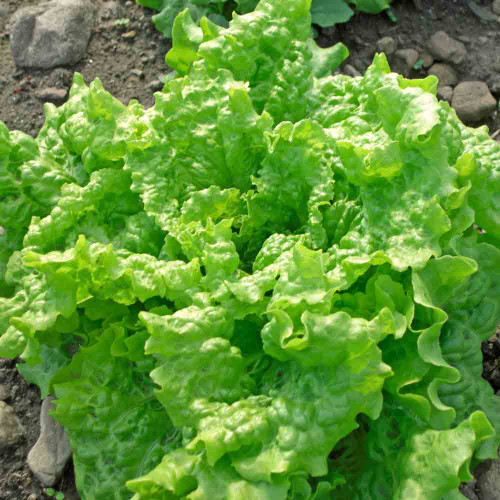
Clary Sage Seeds - (Salvia sclarea)
- SKU:
- H1017
- Seed Count:
- Approx 35 seeds per pack
- Type:
- Biennial
- Plant Spacing:
- 12-18"
- Status:
- Heirloom, Non-Hybrid, Non-GMO seeds




Description
Clary Sage - The Night Shift: A Biological Beacon
There is a specific moment in the summer garden, just after the sun sets, when the Clary Sage (Salvia sclarea) wakes up. While the zinnias and sunflowers fade into the shadows, this statuesque sage takes over, releasing a warm, balsamic fragrance specifically designed to rule the twilight. It is the anchor of the garden’s "Night Shift," a biological beacon that summons the Sphingidae—the massive Hummingbird Moths that standard pollinators ignore.
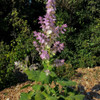
To grow Clary Sage is to extend the life of your garden beyond the daylight hours. It is not a passive bedding flower; it is a presence. Standing four feet tall with pink-purple bracts that glow in the evening light, it transforms a standard flower border into a twenty-four-hour ecosystem, inviting you to step outside and witness a world of pollination that most gardeners never see.
Details
This robust herbaceous species is a true biennial that acts as a vertical anchor in the garden rather than a simple bedding flower. Native to the rocky, sun-drenched terrains of the Northern Mediterranean, Syria, and Central Asia, it is built for resilience and is cold hardy from zones 5 through 9. Unlike annual sages that bloom and die in a single season, Clary Sage plays the long game. In its first year, the plant directs its energy downward, establishing a deep taproot while forming a low, ground-hugging rosette of massive leaves. This vegetative base can span up to eighteen inches across, though the individual leaves themselves often reach nine to twelve inches in length. These leaves are egg-shaped to elongated and possess a heavily wrinkled, pebbly surface that resembles spinach, but with a significantly sturdier, felty texture. This "fuzz" is a functional defense; the dense mat of hairs acts as a chemical factory, releasing the plant's signature balsamic aroma when brushed to deter herbivores.
Only in the second year does the plant reveal its true scale, sending up multi-branched flower spikes from June to August that tower three to four feet high. This substantial footprint needs full sun and well-drained soil, thriving in xeric—or dry, drought-prone—environments that would stress standard moisture-loving vegetables.While the textured foliage and potent aromatics make it highly resistant to deer, the plant acts as a magnetic beacon for specific pollinators.
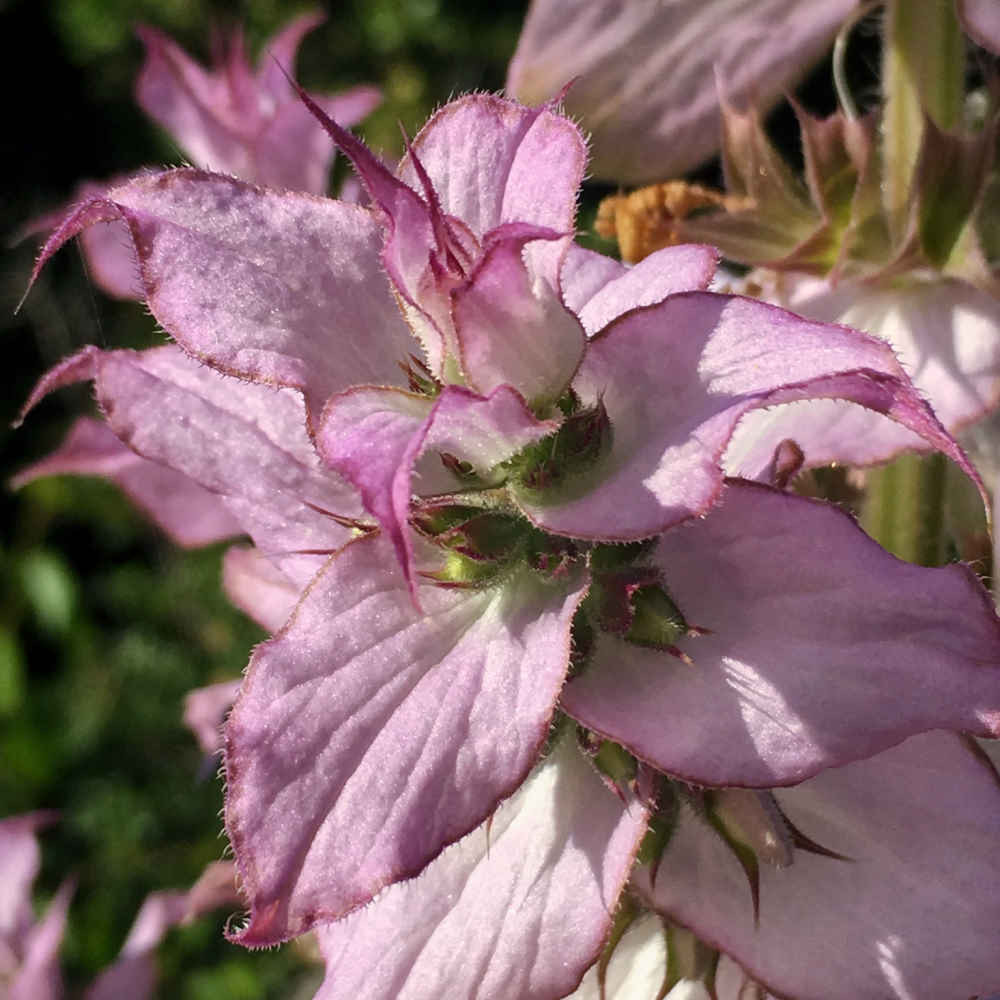
The actual flowers are small, roughly one inch long, and typically bloom in soft shades of lilac or creamy white. However, large, modified leaves called bracts support them. These bracts are the true showstoppers, ranging from white and pink to deep mauve. Unlike the ephemeral flowers which drop quickly, these colorful bracts remain structurally intact for months, providing a long-lasting display long after the seed has set. The scent is equally distinct; unlike the sharp, camphor-forward smell of common garden sage, Clary Sage releases a warm, nutty, musky profile that is widely regarded in aromatherapy as a profound relaxant.
History
Two millennia of biological utility define the provenance of Clary Sage. The very name is a map of its uses: the genus Salvia comes from the Latin salvere ("to save"), while the species name sclarea is derived from clarus ("clear"), a direct reference to its ancient title as "Oculus Christi" or "Eye of Christ." Medieval herbalists used the mucilaginous seeds to clear foreign bodies from the eyes; when placed under the eyelid, the seed forms a thick, smooth coating that encapsulates grit, allowing it to be slid out painlessly. This medical utility cemented its place in European monastery gardens, but its potent essential oils eventually led to its infamous era as "Muscatel Sage," where brewers used it to adulterate inferior wines until the practice was widely outlawed. Its most profound contribution, however, is chemical. The discovery of sclareol allowed 20th-century perfume chemists to synthesize a sustainable alternative to Ambergris, the rare whale-derived fixative. This chemical breakthrough effectively transitioned the industry away from animal sources, linking the cultivation of this soil-bound herb directly to the preservation of the Sperm Whale.
Uses
While modern gardeners often treat Clary Sage solely as an ornamental backdrop, its utility in the kitchen and apothecary is substantial. The plant’s flavor profile is intensely aromatic, balsamic, and slightly bitter, acting as a potent seasoning that should be used with restraint. The young, tender leaves can be dipped in a light batter and fried as fritters, a traditional preparation that mellows the potent oils into a savory, crisp accompaniment to roasted meats. Fresh flowers are often used as a garnish for salads or steeped in teas, where they impart a complex, floral note reminiscent of the Muscat wines they once counterfeited. Beyond the plate, the essential oil remains a cornerstone of aromatherapy, valued for its high ester content, which provides a deep, fixative base note in potpourri and herbal blends.
Companion Planting
Clary Sage functions as the anchor of the "Night Shift" guild in a diverse garden ecosystem. Its most critical ecological role is attracting the night-flying heavyweights—specifically the Hummingbird Moth and Sphinx Moth—which are active during twilight hours when honeybee activity ceases. By planting Clary Sage near night-pollinated crops like moonflowers, evening primrose, or certain gourds, you ensure a continuous pollination cycle that operates twenty-four hours a day. Structurally, it pairs well with lower-growing, drought-tolerant perennials like Lavender, Thyme, and Echinacea, which share its need for sharp drainage and full sun but do not compete for the upper canopy light.
The plant also serves native bees through its specialized anatomy. Clary Sage flowers utilize a "staminal lever mechanism"—essentially a biological seesaw designed for heavyweights. When a large pollinator, such as a Carpenter Bee or Bumblebee, pushes into the flower for nectar, the lever swings down, depositing pollen on the insect's back. Smaller honeybees often lack the mass to trigger this trap and will instead "steal" nectar by piercing the flower base. This makes Clary Sage a critical habitat builder for native solitary bee populations, specifically the often-maligned but ecologically critical Carpenter Bee. Additionally, the strong, volatile oils help to confuse the scent targeting systems of the Cabbage Moth, making it a strategic neighbor for kale and broccoli, provided it is kept away from moisture-loving crops like cucumbers that require the heavy irrigation that would rot the Sage's taproot.
Planting and Growing Tips
Clary Sage is almost exclusively grown from seed, and success comes from understanding its need for light during germination. Unlike large seeds that need deeper planting, Clary Sage seeds must be surface sown. To start indoors, press the seeds firmly into the surface of moist, sterile potting mix six to eight weeks before the last frost, leaving them uncovered. Maintain a temperature of 65°F to 75°F; germination can be slow, often taking up to two weeks. If direct sowing, scatter the seeds on a prepared, weed-free seedbed in late spring and lightly press them to ensure soil contact without burying them.
Base your strategy on your climate zone. In cold winter areas (Zones 5-7), sow indoors in early spring for transplanting, or direct sow in late spring for blooms the following year. In mild winter areas (Zones 8-9), the ideal strategy is to direct sow in late summer or early autumn (August/September). This allows the plant to establish a robust rosette over the winter, ensuring a massive bloom the following spring. Once established, the plant is xeric (drought-tolerant) and dislikes "wet feet," particularly in winter; heavy clay soils that hold water can kill the taproot. It prefers light, sandy, or gravelly soils and does not require high fertility—too much nitrogen will produce lush leaves at the expense of flowers. Finally, Clary Sage is a robust self-seeder. If left unchecked, it will happily naturalize and build a permanent colony in your garden; if you wish to limit its spread, simply remove the flower stalks after the bloom fades but before the seeds turn brown and drop.
Harvest Tips
To harvest Clary Sage, observe the oil concentration in the bracts—the colorful modified leaves—rather than just the visual bloom. For the highest quality fragrance and oil content, harvest the flower spikes when the bottom flowers have opened, but the top buds remain closed. The optimal time to cut is late morning, after the dew has evaporated but before the midday sun volatilizes the essential oils. Cut the entire stalk at the base, handling the plant gently to avoid bruising the sticky, resinous bracts. For drying, hang the stalks upside down in bunches in a warm, dark, and well-ventilated area. If harvesting leaves for culinary fritters, select young, tender leaves from the first-year rosette or the upper growth of second-year plants, picking them just before use to preserve their turgidity—that internal water pressure that keeps the leaf crisp and prevents it from going limp in the batter.
From the soil to the seed to the food you eat - we'll help you grow your best garden!
1 Review
-
All time favorite sage plant
Clary sage is magnificent to behold in the garden. Depending on the garden location, this biannual can grow up to five feet tall. Used traditionally for women and children's health, this is a great dried herb to take baths with to alleviate cramps. The name clary, a derivative of clear eye was named as such for clearing up eye irritations. I have also had success with this particular usage using the seeds in a water tincture as an eye rinse. A glorious plant to grow.
Related Products
Related Products

Scarlet Sage Seeds - (Salvia coccinea)
Common Sage Seeds - (Salvia officinalis)
Terroir Seeds Cut Flower Seed Mix