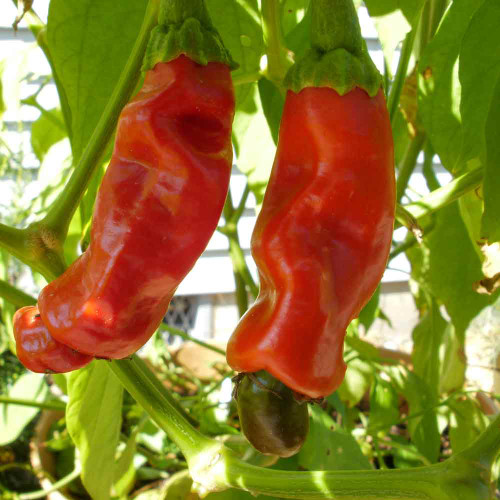
Shishito Hot Pepper Seeds - (Capsicum annuum)
- SKU:
- V1586
- Seed Count:
- Approx 25 seeds per pack
- Days to Maturity:
- 60-80 days
- Type:
- Hot
- Days to Germination:
- 14-21 days @ 75-95F
- Light Preference:
- Full sun
- Plant Spacing:
- 18"
- Status:
- Heirloom, Non-Hybrid, Non-GMO seeds



Description
Shishito Pepper - The Essential Japanese Frying Pepper
The Shishito is best known for its culinary Roll of the Dice —a game of chance where one in ten peppers delivers an unexpected burst of heat. Yet, unlike the punishing spice of a super-hot chili, this heat is a manageable spark, just enough to start a conversation without ruining the meal. But beneath this playful reputation lies a serious history that spans oceans and centuries.
While deeply rooted in Japanese agriculture, the Shishito is a biological traveler. It is a living artifact of 16th-century exploration, carried from the Americas to the shores of Japan by Portuguese traders. There, farmers adopted and refined the pepper, selecting for complex flavor and a delicate bite over the aggressive heat of its ancestors. Today, this pepper has transcended its origins to become a fixture in everything from traditional Tokyo izakayas to trendy American gastropubs. To experience the true "snap" and complex citrus notes that made this pepper a staple, it must be harvested fresh from your own garden.
Details
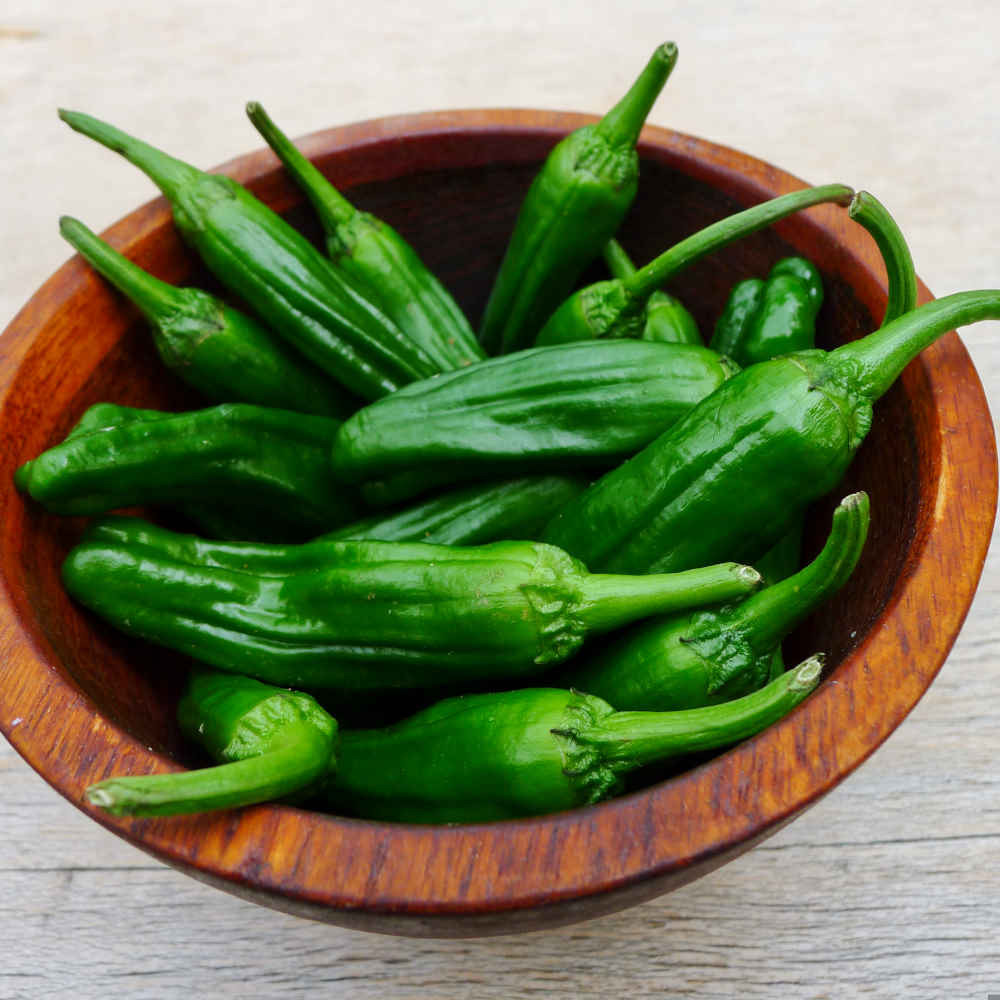
The Shishito is a paradox: overwhelmingly mild with a delicate, grassy sweetness, yet capable of a moderate burst of heat. Distinct from both sweet bells and hot chilies, the fruit—typically 3 to 4 inches long—is defined by deep longitudinal grooves and a delicate, wrinkled texture.
These wrinkles are functional engineering: when exposed to high heat, the ridges blister and char rapidly while the valleys steam, creating a unique "snap" and smoky flavor without turning mushy. The blunt, knobby tip often folds inward.
This lack of a thick skin allows the pepper to melt in the mouth when cooked, fusing skin and flesh into a single tender bite. Flavor-wise, it is herbaceous, citrusy, and slightly smoky. While the peppers ripen to a brilliant red, gardeners almost exclusively harvest and eat them at the bright, glossy lime-green stage to capture this specific flavor profile.
While 90% of the fruit is mild (50-200 SHU), roughly one in ten will spike with the heat of a mild jalapeño. This isn't a genetic glitch, but a response to environmental stress. High temperatures, intense sunlight, or drought trigger the plant to produce more capsaicin in the white rib tissue. This variability turns every meal into a culinary game of chance.
The plant itself is a compact, indeterminate bush reaching 18 to 30 inches, making it ideal for containers or small raised beds. It features a dense canopy of deep green foliage that protects the fruit from sunscald. The small white flowers are generally self-pollinating, though wind and insect activity boost yields. It is an exceptionally productive variety; a single healthy plant can produce dozens to upwards of a hundred pods in a season.
While "Shishito" is the global standard, regional nuances exist. In Japan, the name ranges from the casual Shishitō to the formal Shishitōgarashi. A genetically similar Korean cultivar is known as Kkwari-gochu. Gardeners may also encounter "Sweet Shishito" in catalogs—a redundancy used to ensure buyers know it's mild—or the descriptive "Wrinkled Old Man Pepper" in older heirloom circles.
History
The Shishito is a historic heirloom, deeply rooted in Japanese agriculture. Its name is derived from the Japanese word shishi, meaning lion, referring to the pepper’s deeply creased tip, which resembles a lion’s head. While often compared to the Spanish Padrón, the Shishito is a distinct cultivar developed to provide a reliable harvest in the humid summers of East Asia. Farmers prioritized early maturity and prolific fruiting, avoiding the thick, slow-ripening flesh found in Western bell peppers.
The journey of the pepper from the Americas to Japan is the result of Portuguese exploration. In 1543, a Portuguese ship, blown off course by a typhoon, landed on Tanegashima, an island south of Kyushu. This accidental event marked the first direct contact between Europe and Japan. Initially, the Japanese viewed peppers with suspicion or used them primarily for medicinal purposes. However, over time, Japanese farmers began to select for traits that suited the local palate, which generally favored milder, subtler flavors over the aggressive heat of the original American chilies.
The Shishito is frequently compared to the Spanish Padrón pepper. Genetic analysis suggests they are effectively cousins, branching from a common ancestor introduced to the Iberian Peninsula. While the Padrón traveled to Spain, similar genetics traveled via Portuguese trade routes to Japan.
Uses
The wrinkled skin and delicate walls allow the pepper to blister and char in seconds when hit with high heat. Cooks almost exclusively eat them green. The standard preparation involves tossing the whole peppers in oil (often sesame) and searing them in a blazing hot cast-iron skillet or over an open flame until the skin blisters and chars, creating savory flavor compounds. The high heat creates a smoky complexity and softens the flesh without making it mushy.
Beyond blistering, the Shishito's structure makes it ideal for Tempura. Because the pepper cooks through in the exact short time it takes the batter to crisp, it results in a perfect textural contrast between the crunchy coating and the tender vegetable. A traditional Japanese preservation method is Tsukudani, where the peppers simmer in a mixture of soy sauce, mirin, sugar, and often bonito flakes or kombu. They cook down until the liquid evaporates and creates a savory, sticky glaze. This intense umami flavor preserves the peppers and makes them a perfect accompaniment to plain white rice.
Companion Planting
Plant Basil as a primary companion. Its strong scent masks the pepper plants from pests like thrips and whiteflies, and many gardeners observe improved fruit flavor. Marigolds promote root health by releasing chemical compounds that repel harmful root-knot nematodes. Nasturtiums act as a "trap crop," luring aphids away from your peppers.
Avoid planting near tomatoes, as they share susceptibility to blight and hornworms. Exclude Fennel, as its allelopathic nature inhibits pepper growth.
Planting and Growing Tips
Shishito plants need heat and patience. Germination takes time and benefits from a seedling heat mat to maintain a soil temperature of 80–85°F. Start seeds indoors 8-12 weeks before the last frost date and provide intense light to prevent legginess. Do not rush transplanting; wait for night temperatures to consistently exceed 55°F and the soil to warm to at least 60°F. Plant in full sun (6-8 hours) and sandy loam soil; heavy clay leads to root rot.
Bees utilizing "buzz pollination" vibrate the flowers to release pollen, significantly benefiting fruit set.
Harvest Tips
The Shishito relies on momentum. You must harvest the first flush of fruit immediately when they reach 2 to 3 inches long, even if you do not need them yet. If these early fruits are left to mature to red, the plant receives a signal that it has successfully reproduced and will shut down new flower production.
Constant harvesting ensures a continuous yield until frost. Harvest when the peppers are firm, glossy, bright green, and approximately 3 to 4 inches long. Always use shears or a sharp knife to harvest; the stems are tough, and pulling peppers by hand can easily snap brittle branches or uproot the entire plant.
For storage, keep unwashed peppers in the crisper drawer of the refrigerator in a breathable bag. They will remain fresh for 1 to 2 weeks, provided they are kept dry—moisture decreases storage life, so do not wash the peppers until you are ready to use them.
Learn More
- Growing Peppers 101
- Chile and Pepper Growing Tips
- Grow Better Peppers with Shade
- Fermented Pepper Sauce
- Fermented Chile Paste
From the soil to the seed to the food you eat - we'll help you grow your best garden!
Related Products
Related Products
Anaheim Hot Pepper Seeds - (Capsicum annuum)

Pepperoncini Hot Pepper Seeds - (Capsicum annuum)

Concho Hot Pepper Seeds - (Capsicum annuum)

Chilhuacle Negro Hot Pepper Seeds - (Capsicum annuum)