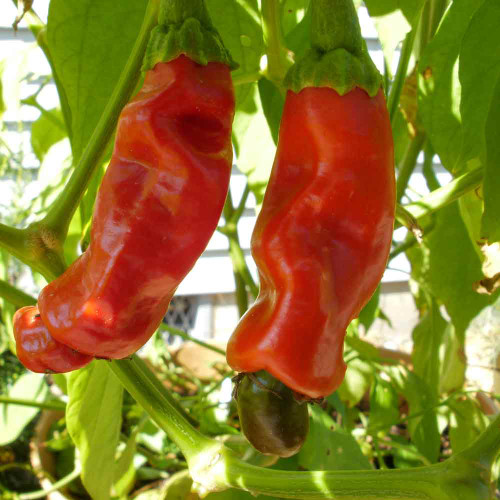
Tabasco Hot Pepper Seeds - (Capsicum frutescens)
- SKU:
- V1490
- Seed Count:
- Approx 25 seeds per pack
- Days to Maturity:
- 90 days
- Type:
- Hot
- Days to Germination:
- 14-21 days @ 75-95F
- Light Preference:
- Full sun
- Plant Spacing:
- 18"
- Status:
- Heirloom, Non-Hybrid, Non-GMO seeds




Description
Tabasco Pepper - The "Sauce Pepper" Since 1849
For spicy food lovers around the world, the word "Tabasco" brings to mind the diamond-labeled icon that launched the global hot sauce industry. But to the heirloom gardener, the Tabasco pepper offers a rare botanical trait. Unlike the dry, crisp flesh of a cayenne or jalapeño, the Tabasco pepper stands as the only "juicy" hot pepper in the garden. Nature biologically primed this pod for fermentation; its interior softens and dissolves when mature, creating a capsaicin-rich nectar that wants to be bottled, not dried. It was this unique "wet" quality that inspired Colonel Maunsell White in 1849. Realizing these peppers would not dry in the Louisiana air, he brewed them into a "concentrated extract," establishing the American hot sauce tradition twenty years before the corporate legend began. This is an invitation to grow the "Sauce Pepper of the South" and reclaim the true, liquid history of the Gulf Coast.
Details
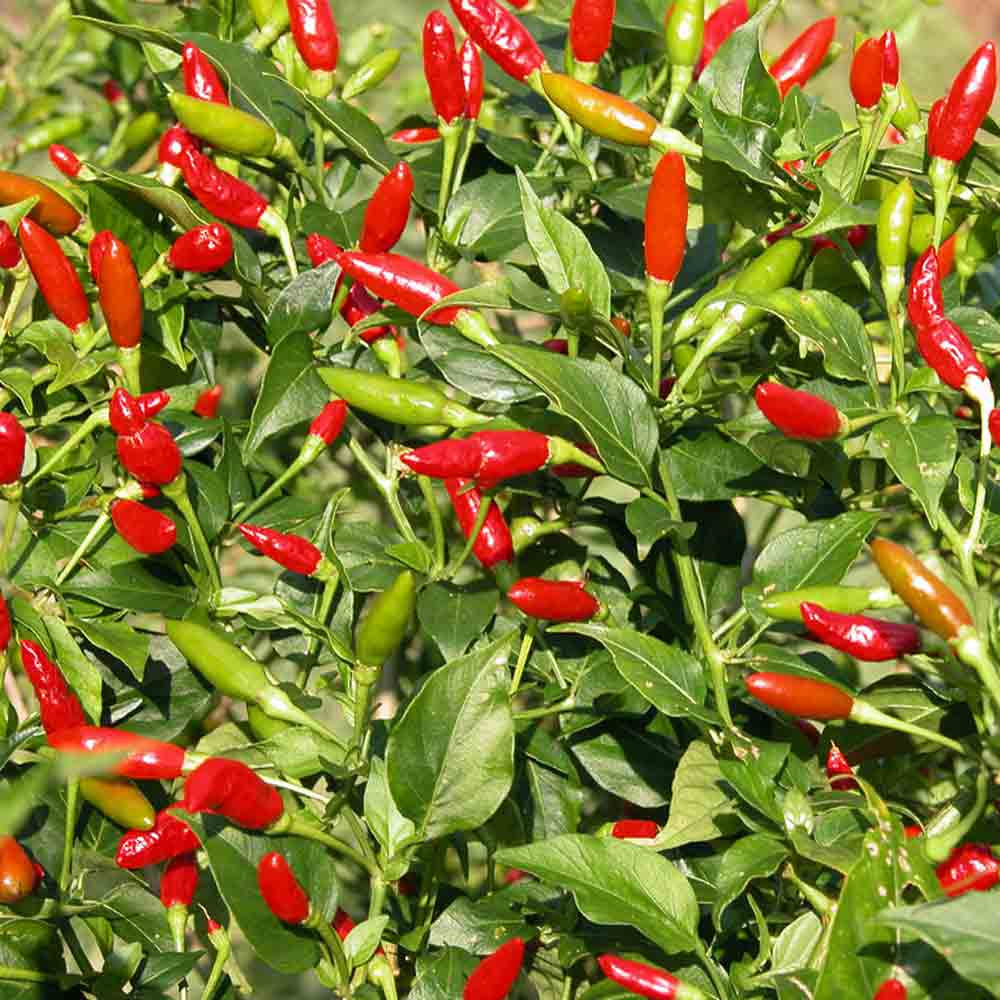
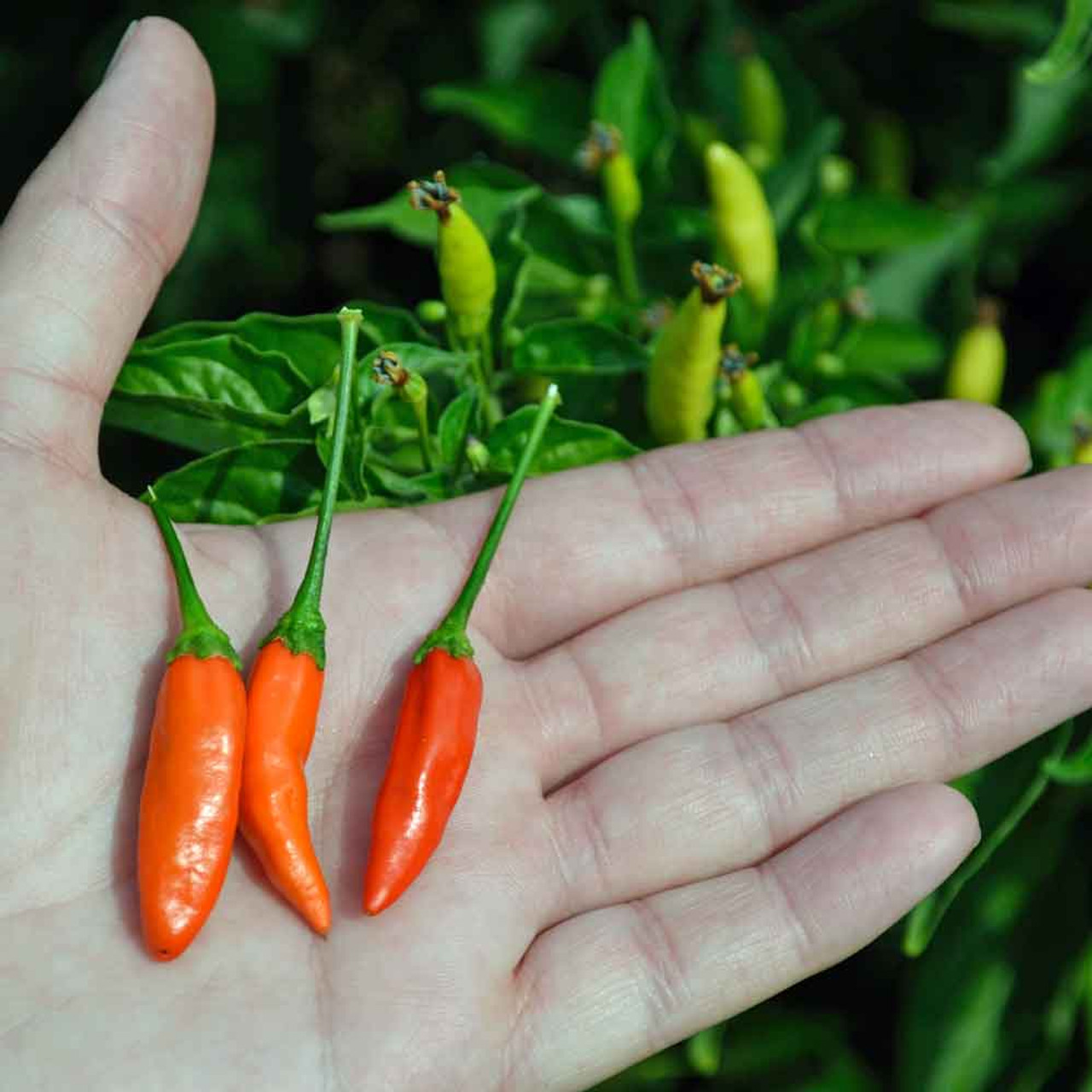
As a unique species (Capsicum frutescens), the Tabasco pepper behaves differently from other hot peppers. Standing closer on the evolutionary tree to the wild "bird peppers" of the Amazon, it delivers a sharp, piercing heat (30,000–50,000 SHU) and complex fruity undertones. In temperate gardens, it grows upward with a strong, woody central stem, often reaching 4 feet tall. The plant produces small, 1-2 inch pods that ripen from pale green to yellow, orange, and finally crimson red. Because it flowers continuously, a single bush often displays all colors simultaneously, creating a "confetti" effect that serves as both a culinary staple and a striking ornamental.
The fruit grows erect, pointing straight up—an evolutionary trait designed to increase visibility to birds. Most distinct is the pepper's "wet" interior. The cell walls soften and break down upon ripening, creating a juicy, pre-mashed pulp perfect for sauce but difficult to air-dry without molding.
History
The species Capsicum frutescens has a deep history in the Americas, likely originating in the tropics of Panama or Mexico. Migratory birds and pre-Columbian trade routes distributed these wild ancestors across the Caribbean and the mainland long before European arrival. The name "Tabasco" explicitly points to the Mexican state of Tabasco, a humid region on the Gulf of Mexico. This geographic marker traces the likely path of the seed stock to New Orleans, the major port for goods flowing from the Mexican coast.
While corporate legend attributes the pepper's American debut to Edmund McIlhenny in the late 1860s, the historical record identifies a different originator: Colonel Maunsell White. A hero of the Battle of New Orleans, White cultivated this "new species of red pepper" on his Deer Range Plantation as early as 1849—two decades before the famous patent. Soldiers returning from the Mexican-American War (1846–1848) likely carried the seeds home from the markets of Tabasco. Realizing these oily peppers would not dry in the humid Louisiana air, White invented a "decoction" by boiling them with strong vinegar. This innovation established the blueprint for the American hot sauce tradition, which he advertised as "Concentrated Extract of Tobasco Sauce," offering it for sale by 1859.
Uses
This pepper exists for sauce. Its unique "wet" interior fails at air-drying but excels at fermentation. Mash fresh peppers with 2-3% salt by weight to draw out juices and create a natural brine. This mixture matures into the complex, umami-rich base of classic hot sauce. For a Southern staple, pack whole ripe peppers into a bottle and cover with boiling vinegar. Shake this "Pepper Vinegar" over collard greens, black-eyed peas, or fried fish to cut fat and add brightness. The fresh pods offer a bright, acidic, and fruity flavor with hints of celery and citrus, without the grassy notes found in many C. annuum varieties.
Companion Planting
Plant Basil as a primary companion. Its strong scent masks the pepper plants from pests like thrips and whiteflies, and many gardeners observe improved fruit flavor. Marigolds promote root health by releasing chemical compounds that repel harmful root-knot nematodes. Nasturtiums act as a "trap crop," luring aphids away from your peppers.
Avoid planting near tomatoes, as they share susceptibility to blight and hornworms. Exclude Fennel, as its allelopathic nature inhibits pepper growth.
Planting and Growing Tips
This tropical plant demands heat and patience. Germination takes time and benefits from a seedling heat mat to maintain a soil temperature of 80–85°F. Start seeds indoors 8-12 weeks before the last frost date and provide intense light to prevent legginess. Do not rush transplanting; wait for night temperatures to consistently exceed 55°F and the soil to warm to at least 60°F. Plant in full sun (6-8 hours) and sandy loam soil; heavy clay leads to root rot. Unlike some peppers stressed to increase heat, Tabasco peppers need consistent moisture to support their juicy interior; significant wilting stunts production.
- Zones 9b–12: Plant directly in the ground as a perennial shrub. Prune back by one-third in late winter to encourage bushy growth.
- Zones 8a–9a: Grow as a long-season annual. Mulch heavily to extend soil warmth into autumn.
- Zones 4–7: Grow in containers to maximize heat and mobility. Bring pots indoors before the first frost to overwinter.
Ecological Note: Bees utilizing "buzz pollination" vibrate the flowers to release pollen, significantly benefiting Tabasco blooms.
Harvest Tips
The Tabasco displays a fascinating trait known as the "deciduous pedicel." As the fruit ripens, the cellular bond between the pod and the stem dissolves. When fully red and ripe, the pepper detaches with a gentle touch, leaving the stem behind on the plant. If you must pull, twist, or cut, the pod is not physiologically ripe. Always wear nitrile gloves when harvesting. A broken pod releases capsaicin oil instantly, which causes pain upon contact with skin or eyes.
Learn More
- Growing Peppers 101
- Chile and Pepper Growing Tips
- Grow Better Peppers with Shade
- Fermented Pepper Sauce
- Fermented Chile Paste
From the soil to the seed to the food you eat - we'll help you grow your best garden!
1 Review
-
100% Germination!
I bought seeds from several companies this year. These are the best. 30% germination with another big name brand. These all sprouted. Very happy!
Related Products
Related Products

Pepperoncini Hot Pepper Seeds - (Capsicum annuum)
Anaheim Hot Pepper Seeds - (Capsicum annuum)

Concho Hot Pepper Seeds - (Capsicum annuum)

Chilhuacle Negro Hot Pepper Seeds - (Capsicum annuum)