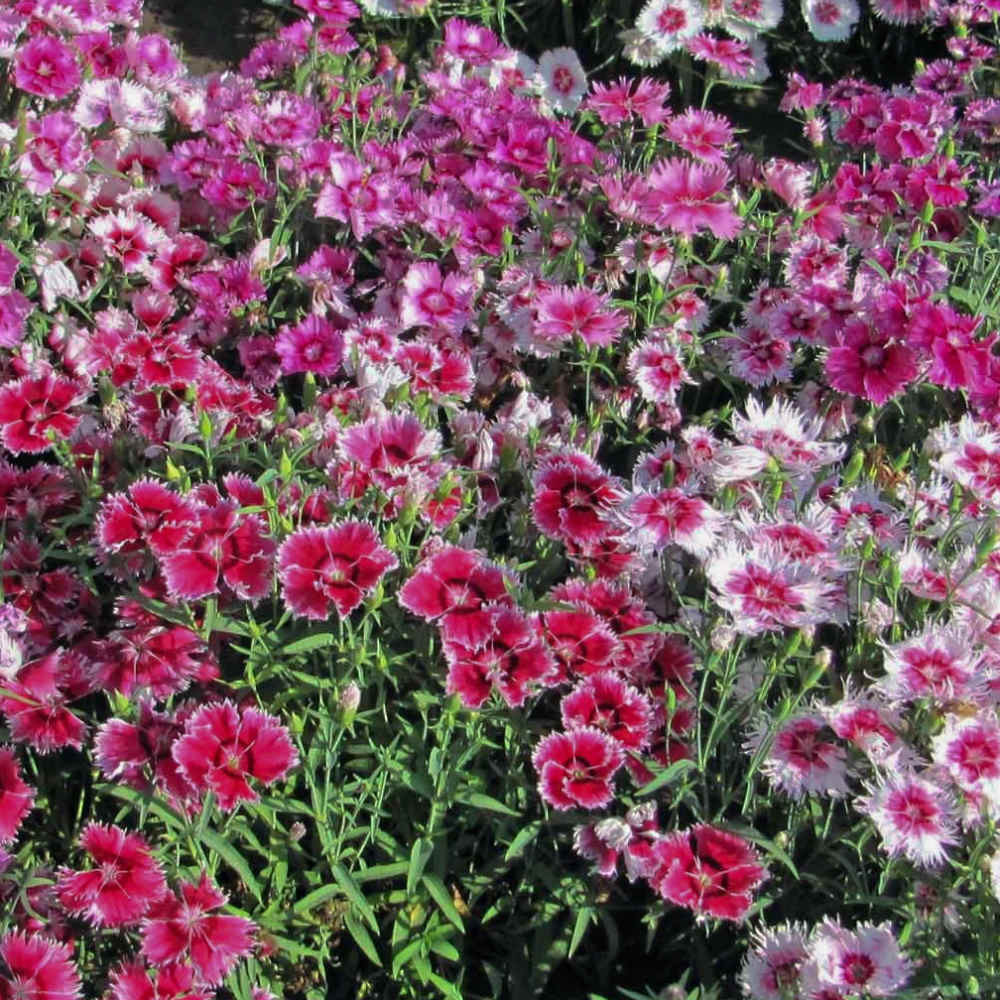
Dianthus Large Flowered Seed Mix - (Dianthus hybridus)
- SKU:
- F1220
- Seed Count:
- Approx 125 seeds per pack
- Type:
- Short-lived perennial
- Status:
- Heirloom, Non-Hybrid, Non-GMO seeds




Description
Dianthus ‘Large Flowered Mix’ - The Fragrant Legacy of the Cottage Garden
We invite you to rethink your knowledge of Dianthus entirely. While it is most often thought of as a decorative flower, history remembers it as a primary source of spice. Long before cloves and cinnamon were staple pantry items, the aromatic oils of this ancient heirloom provided the spicy warmth for summer cordials and winter wines. Our ‘Large Flowered Mix’ brings that original purpose back to your garden with a sprawling mound of blue-green foliage and a fragrance so dense it can scent an entire afternoon. Plant these seeds, and you transform a standard flower bed into a visual experience.
Details
This short-lived perennial offers an intense, complex perfume instead of a permanent landscape structure. It grows into a well-behaved, tidy mound, typically reaching a mature height of 10 to 18 inches with a spread of 12 to 15 inches—a substantial footprint that draws the eyes without overwhelming neighboring plants. The slender, grassy leaves form a dense, often evergreen mat in elegant shades of blue-green or silvery-green. This coloration functions as a sunscreen evolved to manage moisture and UV exposure in open, rocky environments.
In garden centers and historic texts, you will find this variety referred to by several names, most commonly as "Pinks," "Clove Pinks," or "Cottage Pinks". This mix also captures the diversity of the broader family, including the clustered form of "Sweet William" and the vivid colors of the "China Pink". It is the ancestor of the modern "Carnation," a name that links it to the classical crowns of antiquity.
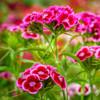
This mix collects centuries of selection, blooming in single or ruffled semi-double forms. Their most defining traitis the intricately fringed or serrated petal edges, a characteristic so integral that it likely originated the name "pinks". This mix produces a spectrum of crimson, rose, purple, and pure white, often featuring delicate lacing. While hardy in Zones 3–9, gardeners should view this as a dynamic, self-sowing crop rather than a permanent fixture, because the plant invests heavily in flowering, it may eventually exhaust itself. We suggest replanting each year to keep the visual appeal.
History
The Dianthus family is ancient, documented over two millennia ago by the Greek botanist Theophrastus, who named it Dios-anthos—the "Flower of the Gods". In Greek and Roman culture, gardeners wove the blooms into ceremonial crowns (corona), which remains a leading theory for the origin of the common name "carnation." Beyond its classical roots, the flower carries deep symbolic weight; Christian folklore suggests the first carnations sprang from the tears of the Virgin Mary, cementing the pink variety as a symbol of maternal love and leading to its status as the official flower for Mother’s Day in the United States.
For centuries, this anchored the cottage garden, prized for a culinary role that went far beyond aesthetics. During the 16th and 17th centuries, the flower's clove-like fragrance earned it the nickname "Sops-in-Wine," as brewers steeped the petals in wine and ale to impart spicy warmth long before imported cloves were widely affordable. This ‘Large Flowered Mix’ preserves these pre-industrial genetics and connects directly to Thomas Jefferson, who recorded planting "Pinks" as early as 1767 and continued to include them in the gardens at Monticello for decades.
Uses
This versatile plant functions as both a decorative cut flower and a "soft spice." In the garden, its primary role is providing long-lasting blooms for indoor arrangements, where its clove-like scent can perfume an entire room. The sturdy stems and diverse color patterns make these flowers an exceptional choice for bouquets, and with proper care, they can maintain their freshness in a vase for up to two weeks. They are particularly effective when used as a "scent-anchor" in floral displays, providing a warm, aromatic layer that many modern varieties lack. The nectar-rich blossoms act as a pollinator magnet, drawing in bees, butterflies, and hummingbirds throughout the long blooming season.
In the kitchen, the flavor profile mirrors its iconic aroma: a mild sweetness with distinct notes of clove, nutmeg, and cinnamon. These traits make the petals a unique companion for fruit salads, apple pies, and summer cordials. For an unusual approach, you can candy the petals with superfine sugar to create professional-looking garnishes for cakes or simmer them into a floral simple syrup to flavor cocktails and sparkling water.
When working in the kitchen, you must first remove the white "heel" at the base of the petal, as this part carries intense bitterness.
Companion Planting
Pair Dianthus with plants that also need well-drained, alkaline soil. Roses are a classic pairing; the Dianthus mounds effectively cover the "bare legs" of rose bushes while both species thrive in full sun. Mediterranean herbs like Lavender and Thyme are also ideal neighbors, sharing a tolerance for drought and lean soil while their silver-grey foliage complements the blue-green leaves of the Dianthus.
On the other hand, you should avoid planting Dianthus near shade-loving Hostas or acid-loving plants like Azaleas and Blueberries. The acidic soil required by those species makes them fundamentally incompatible in the same soil bed.
Planting and Growing Tips
Dianthus thrives on lean soil and sharp drainage and is intolerant of "wet feet". Do not amend your soil heavily with rich compost or manure. High nitrogen levels create rapid, leggy growth that causes the stems to flop under their own weight.
In Zones 3–7, sow seeds indoors 8 weeks before the final frost. Because the seeds require light to germinate, surface sow them on moist medium and provide a light dusting of soil, maintaining soil temperatures between 60°F and 70°F. In warmer Zones 8–9, plant in the fall to allow the roots to establish during the cool months, leading to a more spectacular spring bloom. Once established, the plants are remarkably drought-tolerant, and bloom best when the top inch of soil is allowed to dry out between waterings. Regular deadheading—snipping off faded flowers just above a set of leaves—keeps the plant blooming all summer.
Harvest Tips
For the best flavor and scent, harvest stems in the early morning when they are fully hydrated. The scent peaks in the mid-morning after the dew evaporates but before the heat causes the aromatic oils to dissipate. For the longest vase life, cut the stems at a 45-degree angle when approximately 20% of the florets are open; the remaining buds will continue to open indoors.
Immediately strip any foliage that would sit below the water line to prevent bacterial rot and place the stems in lukewarm water.
From the soil to the seed to the food you eat - we'll help you grow your best garden!
Related Products
Related Products
Terroir Seeds Cut Flower Seed Mix

Edible Flower Seed Mix
Fragrant Flower Seed Mix

Native Flower Seed Mix for Monarchs

Monarch Butterfly Flower Seed Mix